Forklift Tynes Explained: Types, Sizing, Capacity & Safety Limits
Forklift tynes commonly known as forks, are the sole point of contact between your machine and your load. Running the right set isn't just about fit; it’s essential for keeping your operations safe, steady, and compliant.
In this guide, you'll learn the key terminology, how to match tyne types and carriage sizes to your fleet, how length affects load capacity, and when wear limits require a replacement.
Forklift Tyne Termonology
It is essential to understand the common terms when it comes to forklift tynes:
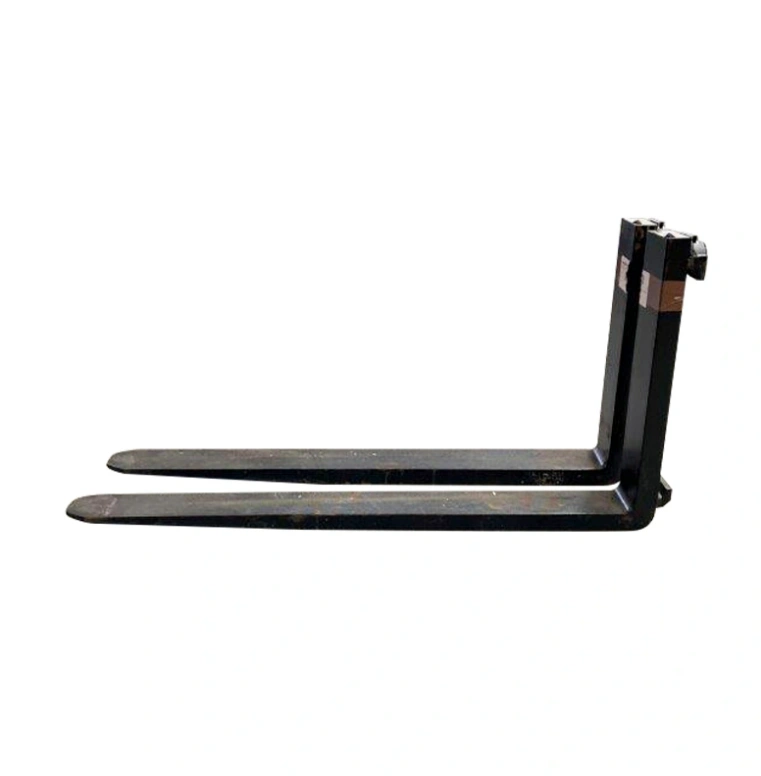
- Tynes (Forks): Are the heavy-duty, L-shaped steel arms that lift, carry, and support your load.
- Blade: The flat, horizontal section of the tyne that slides beneath pallets and bears the weight of the load.
- Tip: The tapered front edge of the blade, shaped to enter pallet pockets smoothly without catching or damaging stock.
- Heel: The 90-degree curved bend where the vertical shank meets the horizontal blade. Because it absorbs the highest stress during lifting, the heel is the primary spot checked for wear and fatigue.
- Shank: The vertical back section of the tyne that rests against—and mounts onto—the forklift carriage.
- Carriage: The steel frame attached to the front of the forklift mast that holds the tynes (or hydraulic attachments) in place.
- Load Centre: The horizontal distance measured from the vertical front face of the tyne shank to the load’s centre of gravity typically 500mm or 600mm on standard Australian forklifts.
- Tyne Class (ITA Class): The standardised sizing system (Classes I to IV) used to match a tyne’s mounting hooks to the carriage height and lifting capacity of the forklift.
Different Types of Forklift Tynes and Attachments
Matching the forklift tyne profile to your load protects your stock and speeds up handling. While standard blades cover most general warehousing, specialist applications call for purpose-built forklift tyne designs:
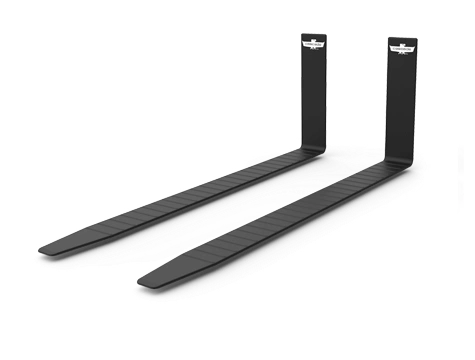
- Standard Forklift Tynes: The everyday forklift tyne for palletised goods and general material handling, featuring a flat blade and tapered tip for smooth pallet entry.
- Full-Tapered & Polished Forklift Tynes: Ground smooth with a gradual blade taper, ideal for fragile goods, slip sheets, and tight storage spaces.
- Block Tynes: Thinner, wider blades engineered to slide cleanly under unpalletised packs of bricks, pavers, and concrete blocks.
- Shaft-Mounted (Pin-Type) Forklift Tynes: Mounted on a solid steel bar rather than carriage hooks, built for rough-terrain forklifts, heavy-duty machinery, and telehandlers.
- Telescopic Forklift Tynes: Extendable blades that adjust to suit varying load lengths, single-side truck loading, or double-deep racking.
- Coil Forklift Tynes: Shaped with a rounded or concave profile to cradle cylindrical loads like steel coils, pipes, and paper rolls without denting them.
- Drum Handling ForkliftTynes: Contoured blades designed to securely grip and transport barrels and drums without needing a separate attachment.
- Stainless Steel Forklift Tynes: Corrosion-resistant, easy-to-sanitise blades built for food, beverage, pharmaceutical, and washdown environments.
How To Select The Right Forklift Tynes
Picking the right forklift tynes is important and it comes down to matching your forklift to the loads you move every day. Choosing forklift tynes that are too long, too short, or poorly suited to your workplace and job site slows operators down, damages pallets and goods, and creates real safety risks on the floor.
Before ordering a replacement set, run through these five quick checks:
- You need to check your compliance plate. Start with the data plate on your forklift. It will tell you the machine's lifting capacity, load centre, and the maximum tyne size that it is rated to run.
- Match the length to your pallets. Standard Australian pallets are 1165mm × 1165mm, so a 1070mm or 1200mm forklift tyne is usually the best fit. You want enough length to support the whole pallet without the tips poking out the back and hitting whatever is behind it.
- Confirm how they mount. Most warehouse forklifts up to 5 tonnes use standard hook-on carriages. Bigger rough-terrain forklifts usually run shaft-mounted (pin-type) tynes instead.
- Consider what you're lifting. Flat standard tynes handle everyday pallet work fine. If you're moving bricks, steel coils, drums, or fragile goods, you'll want thicker steel or a shaped profile built for that specific job.
- Think about your workspace. Tight warehouse aisles leave no room for extra blade overhang. If you work in food, pharma, or wet washdown areas, stainless steel or coated tynes will stop rust and contamination.
Not sure what fits your machine? Send through your forklift's make, model, and compliance plate details, and the team at Forklogic can match the right set for you.
Forklift Tyne Sizing & Measurements
If you're measuring an old pair of forklift tynes for a replacement, it is important to have the exact measurements. Being out by even a few millimetres on hook spacing or blade thickness can mean ending up with a set that won't lock onto your forklift.
The 4 Measurements You Need
- Blade length: Measure along the top of the blade from the front face of the upright shank right to the tip. (Don't measure from the back of the hooks.)
- Blade width: Measure straight across the flat top of the blade.
- Blade thickness: Measure the vertical thickness on the flat section near the heel. Avoid measuring at the tapered tip or on a worn-down spot under the bend.
- Carriage height: Measure from the top edge of the upper carriage bar to the bottom edge of the lower bar. This tells you which forklift class you have.
How Forklift Tyne Dimensions Affect Forklift Load Capacity
Changing your forklift tyne length directly changes how much weight your forklift can safely handle.
- Why longer tynes lower your capacity: Fitting longer blades or sliding on forklift tyne slippers lets you reach further, but it also pushes the weight of the load further forward. The further forward the weight sits, the easier it is to tip the forklift, so your safe lifting capacity drops.
- Tyne rating vs. forklift rating: Your pair of tynes must be rated to hold at least as much as your forklift. Keep in mind, though, that putting heavy-duty 4-tonne tynes onto a 2.5-tonne forklift does not let that truck lift 4 tonnes.
If you change your tyne length or add slippers, Australian safety rules require an updated compliance plate fitted to the machine before it goes back to work. You can speak to our knowledgeable team at Forklogic for more information about this.
Forklift Tyne Maintenance and Safety
Under Australian Standard AS 2359, forklift tynes are critical load-bearing parts. Because steel wears down and fatigues after thousands of lifts, operators need to check them during daily pre-starts, and a qualified technician must inspect them at least once a year.
When to Take Your Forklift Tynes Out of Service
Park the forklift and replace the tynes straight away if you notice any of these issues:
- 10% heel wear: Dragging blades across concrete floors slowly shaves steel off the bottom of the heel. Under AS 2359, losing just 10% of the blade thickness here cuts the tyne's lifting capacity by 20%. Once it hits 10% wear, the tyne is done.
- Uneven tip heights (the 3% rule): If one blade is bent up or down so the height difference between the two tips is more than 3% of the blade length (over 36mm on a 1200mm tyne), the pair is unsafe to use.
- Cracks in the steel: Any hairline crack, especially around the 90-degree heel bend or along the mounting hook welds, is an automatic fail.
- Bent shanks or loose hooks: If the angle between the blade and the upright shank has opened past 90 degrees, or the hooks no longer sit snug on the carriage, the tyne can slip off under load.
- Broken locking pins: Missing or jammed positioning pins let tynes slide sideways across the carriage while turning.
Two Safety Rules You Can't Bend
- Never weld or heat-straighten a damaged tyne. Tynes are forged and heat-treated for strength. Welding over a crack or heating a bent blade with a torch ruins the steel's strength and can cause it to snap without warning.
- Always replace tynes as a matched pair. Replacing just one worn tyne leaves you with uneven blade thicknesses and tip heights, which makes loads sit crooked and puts extra strain on your mast.
Frequently Asked Questions About Forklift Tynes
Are forklift tynes universal across different brands?
Most hook-on tynes made to ISO 2328 standards will fit across major brands like Toyota, Hyster, Crown, Linde, and Mitsubishi, as long as the carriage class (Class I to V) and hook style match.
What is the difference between forklift tynes and tyne slippers?
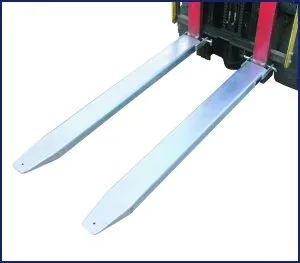
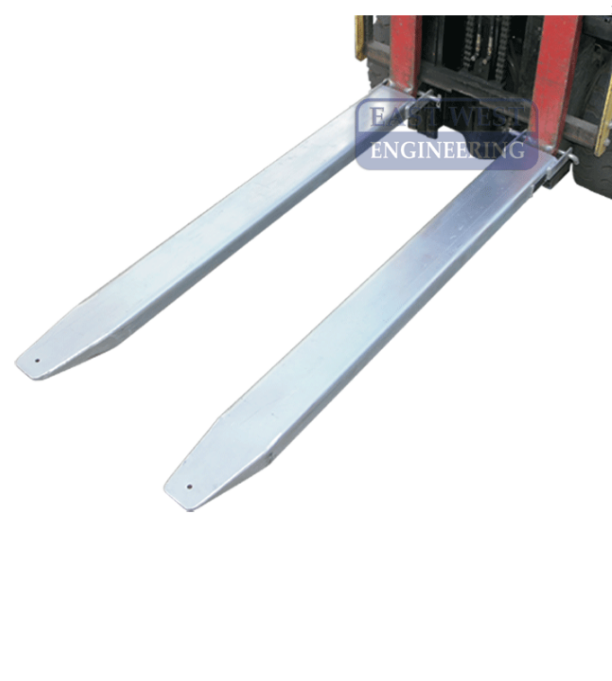
Forklift tynes are the main solid-steel arms mounted directly to your carriage. Tyne slippers (extensions) are hollow steel sleeves that slide over your existing forklift tynes when you need extra reach for long, bulky, lightweight loads. Slippers can't be more than 167% of the length of the tynes underneath them, and your compliance plate must be updated to show the reduced capacity.
Can I put Class 3 tynes on a Class 2 forklift carriage?
No. Class 3 tynes have wider hook spacing (508mm carriage height compared to 407mm on Class 2), so they won't lock onto a Class 2 carriage bar. You always need to match the tyne class to your carriage size.
How often should forklift tynes be inspected?
Operators should look them over for cracks, bent tips, and working locking pins every day before starting a shift. On top of that, a qualified technician should measure heel wear, check straightness, and test for cracks at least once every 12 months, or more often in busy multi-shift sites.
Where can I buy replacement forklift tynes in Australia?
You can order certified, load-rated replacement tynes straight from Forklogic. Whether you need standard pallet tynes, heavy-duty pin-type blades, or compliant tyne slippers, our team can match your carriage class and supply an updated compliance plate to keep your fleet safe and legal.

Need To Order New Tynes For Your Forklift?
Our team at Forklogic can help you. Contact us directly and tell us what you are looking for. Or view our forklift tyne range here.