Pallet Trucks Explained: Manual, Electric & Semi-Electric Pallet Jacks
Moving pallets around a busy warehouse floor might seem straightforward, but relying on manual push-and-pull methods or trying to squeeze a full-sized forklift into tight aisles slows down your operations and increases the risk of workplace injuries.
Whether you're running a distribution hub, retail backroom, food processing facility, or manufacturing site, choosing the right pallet jack (also known as a pallet truck) is one of the easiest ways to keep goods moving quickly and safely.
From budget-friendly manual hand pump trucks to high-efficiency electric walkie and ride-on pallet jacks, selecting the right equipment directly impacts your daily productivity, staff safety, and operating costs.
The team at Forklogic breaks down the different types of pallet jacks, weight capacities, Australian driver licensing rules, and flexible new or used sales and pallet jack hire options so you can find the ideal unit for your business.
What Is a Pallet Jack Forklift?
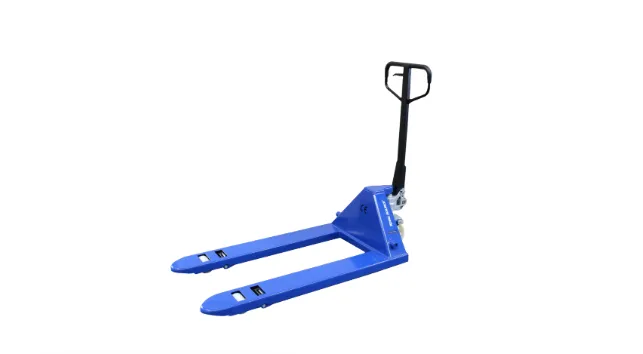
A pallet jack truck is a material handling equipment that is used to lift, load, and move pallet loads over short distances.
A pair of front forks slide underneath the pallet and uses a lift mechanism of either a manual hydraulic pump or an electric motor that then raises the pallet load of the ground for easy wheeling and movement.
Types of Pallet Jack Forklifts
There are various types of pallet jacks for different purposes, budgets, and jobs.
➡️ Manual pallet jack
This is the most common type of pallet jack truck or ‘hand pump truck’ . This type operates entirely on physical effort by using a hydraulic pump handle to raise the forks just enough to clear the ground for short-distance transportation.
➡️ Electric pallet jack
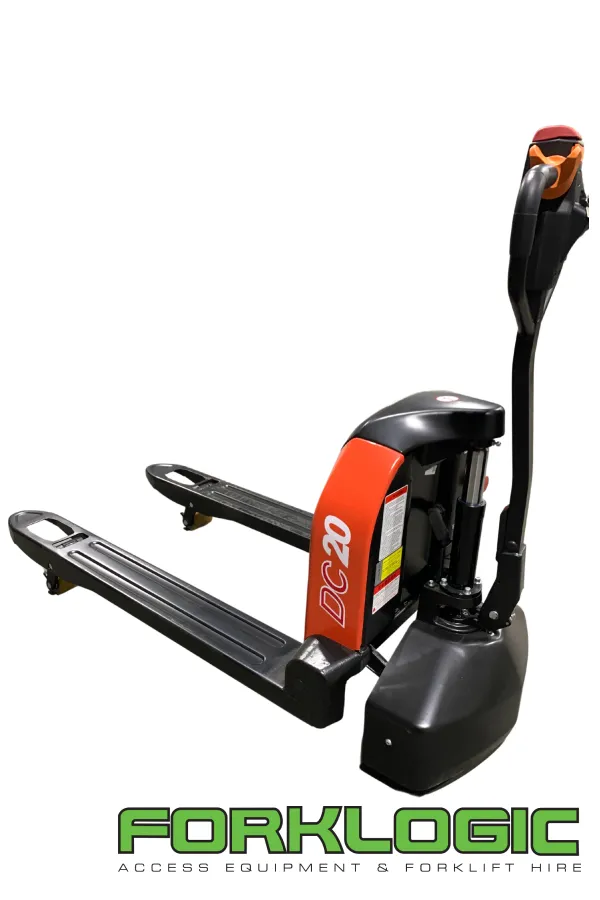
Electric pallet jacks use a motor-powered jack that helps to reduce operator fatigue. The electric pallet jack uses batteries to be able to handle heavier loads and transport the pallets over longer distances.
- Ride-On Pallet Jack: Designed for large warehouses and high-speed distribution centers, ride-on pallet jacks feature a fold-down platform or enclosed operator compartment. This allows the operator to stand on the unit and ride along as it travels, making it the fastest option for transporting heavy pallets across long distances.
- Walkie Pallet Jack: A "walkie" is a pedestrian-operated electric pallet jack where the operator walks behind or beside the machine while steering it using a control tiller handle. They offer effortless, motor-powered lifting and driving in compact spaces and narrow aisles without requiring a High Risk Work Licence.
➡️ High-lift pallet jack
High-lift pallet jacks have forks that raise significantly higher than the standard pallet jack. They typically raise between 800mm and 1,500mm where they bridge the gap between a standard pallet jack truck and a full pallet stacker. These machines allow operators to transfer load directly to workbenches or conveyors.
What Are Pallet Jack Forklifts Used For?
Warehousing & Logistics: Fast staging area loading/unloading and aisle replenishment.
Retail Backrooms & Supermarkets: Navigating tight doorways and customer aisles quietly.
Transport & Delivery Trucks: Carried inside tail-lift delivery trucks for kerbside drops.
Cold Storage & Manufacturing: Stainless steel or galvanized models for washdown/cold environments.
Benefits of Using a Pallet Jack Forklift
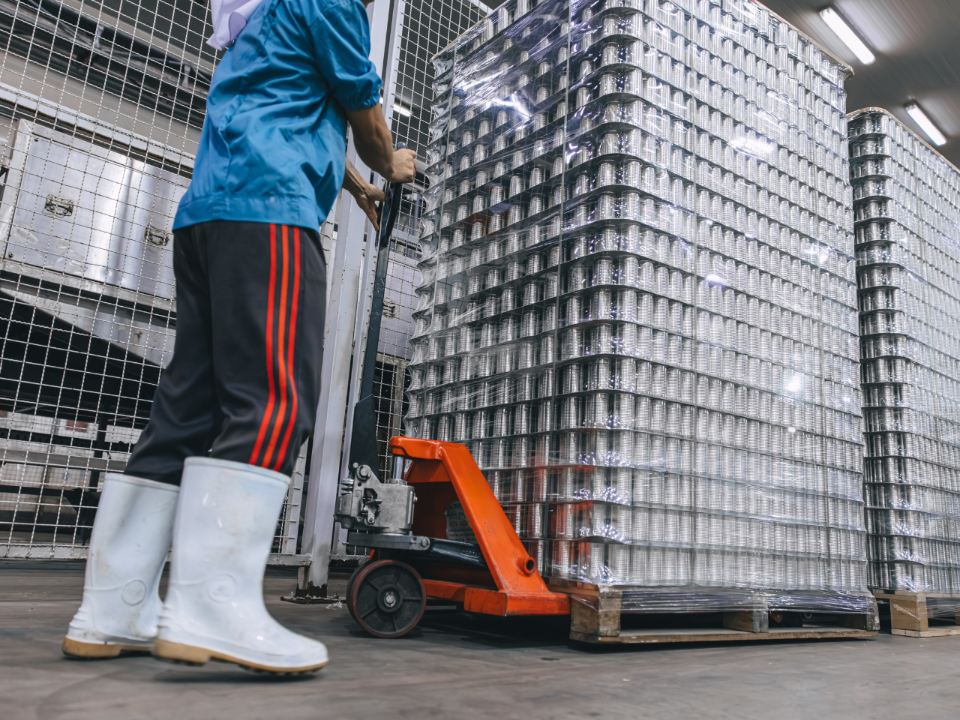
The key operational benefits for using a pallet jack forklift in your business are:
✅ Reduced Risk of Injury: Using a hand pallet jack minimises injuries such as severe strains, back injuries and taking the lifting weight off your employees
✅ Increased Work Productivity: perators can load, unload and transport palletised goods much faster than moving stock manually, helping improve overall warehouse operations.
✅ Lower Employee Fatigue: By using a pallet jack, you are swapping out manual physical labor for mechanical or electric lifting which allows workers to maintain their energy levels.
✅ Maneuverability: The compact design of the pallet jack forklift allows for tighter turning radius while clearing narrow warehouse aisles and stockroom spaces.
✅ Cost-Effective Material Handling: Compared with a forklift, a pallet jack provides an affordable material handling solution with lower purchase, hire and maintenance costs.
✅ Minimal Employee Training: Employees can pick up the operation of manual models as they are very straightforward to use.
Pallet Jack vs Forklift
While both are designed to move palletised goods, a pallet jack and forklift are built for very different material handling tasks. Choosing the right equipment depends on your load capacity, lifting height, warehouse layout and operating environment.
▪️Pallet Jack: A compact, low-cost tool made for flat indoor floors and tight aisles (as narrow as 2.0 metres). It lifts pallets just off the ground to roll them around your warehouse. Best of all, standard walk-behind models do not require a High Risk Work Licence (Class LF) to operate.
▪️Forklift: A large, heavy-duty machine built for high lifting, heavy loads, and outdoor environments like gravel yards and sloped truck ramps. They require much wider aisles (3.2m+), cost more to buy or hire, and strictly require a licensed LF driver.
The Quick Pick: Use a pallet jack to roll stock across smooth indoor floors in tight spaces. Use a forklift for heavy outdoor work, high lifting, and unloading big trucks.
Pallet Jack vs Walkie Stacker
Both machines are popular warehouse equipment for indoor material handling, but they serve different purposes. Understanding the differences can help you choose the most efficient solution for your business.
▪️Pallet Jack (Ground Transport): Moves loads horizontally across the floor. It only lifts a pallet high enough (about 15–20 cm) to clear the ground and roll from point A to point B. It cannot stack pallets on top of each other or put them into racking.
▪️Walkie Stacker (Vertical Stacking): Has a vertical mast like a forklift. It allows you to lift and stack pallets 3.0 to 4.5+ metres high into warehouse shelving.
The Quick Pick: Use a pallet jack to move stock across the floor. Use a walkie stacker if you need to lift pallets up into high warehouse racking.
Manual vs Electric Pallet Jack Comparison
|
Feature / Benefit |
Manual Pallet Jack |
Electric Pallet Jack |
|
Upfront Cost |
Very low and budget-friendly. |
Higher initial investment. |
|
Maintenance |
Minimal; no batteries or electronics. |
Requires regular charging and complex tech care. |
|
Physical Effort |
Moderate; operator pumps and pulls the load. |
Low; motor handles driving and lifting. |
|
Travel Distance |
Best for short distances. |
Ideal for long distances across large facilities. |
|
Special Features |
Simple mechanics; optional built-in weight scales. |
Can include ride-on platforms and automatic braking. |
In general, a manual pallet jack is ideal for occasional use and smaller warehouses, while an electric pallet jack is better suited to busy warehouse operations where operators move heavy loads over longer distances throughout the day.
Choosing the Right Pallet Jack for Your Business
Before buying or hiring a pallet jack, consider:
✅ Your required load capacity
✅ How far loads need to be transported
✅ Warehouse aisle widths
✅ Floor surface and gradients
✅ Daily usage
✅ Manual or electric operation
✅ Battery charging requirements (electric models)
✅ Future warehouse growth
Whether you need a manual pallet truck for occasional use or an electric pallet jack for high-volume warehouse operations, selecting the right equipment can improve productivity while reducing operator fatigue.
Frequently Asked Questions (FAQs)
1️⃣ Do I need a licence to operate an electric pallet jack in Australia?
No. Under Safe Work Australia guidelines, standard pedestrian (walk-behind) electric pallet jacks do not require a Class LF High Risk Work Licence. Operators only need a basic site induction and employer safety briefing to run them. Note: If you use a ride-on electric pallet jack with a platform, an LF licence is generally required.
2️⃣ What is the difference between a pallet jack and a walkie stacker?
A pallet jack is designed strictly for horizontal ground-level movement, raising pallets just enough (around 115mm–200mm) to roll across the floor. A walkie stacker features a vertical mast, allowing operators to lift and stack pallets into high warehouse racking (typically up to 3.0m–4.5m).
3️⃣ How do I charge an electric pallet jack, and how long does the battery last?
Most modern electric pallet jacks feature built-in or lightweight plug-in chargers that run off a standard 240V mains wall socket. Compact lithium-ion models typically run for 3 to 6 hours of continuous use and support "opportunity charging" allowing you to top up the battery during lunch breaks without damaging cell life.
4️⃣ Can a pallet jack handle standard Australian timber pallets?
Yes, as long as you choose the correct fork dimensions. Standard Australian CHEP and Loscam timber pallets require forks with a width over the forks of 685mm. Narrower models (usually 520mm to 540mm wide) are designed specifically for European skids or specialised machinery crates.
5️⃣ Should I buy or hire a pallet jack for my warehouse?
Buying new or pre-owned is the best long-term option for permanent sites moving stock daily. Hiring (short or long-term) is ideal if you want to avoid upfront capital expense, need extra machinery to cover seasonal sales peaks, or want all routine maintenance and servicing costs bundled into one low weekly rate.
6️⃣ Can a pallet jack be driven over ramps or into delivery trucks?
Manual hand jacks and compact lithium-ion electric jacks are routinely used inside delivery vans and tail-lift trucks. However, for sloped loading dock ramps, an electric pallet jack equipped with electromagnetic braking and anti-roll-back safety features is recommended to ensure operator control under heavy loads.

Ready to Move Stock Faster Across Your Warehouse Floor?
Whether you need a pallet jack for a short-term project or a long-term material handling solution, Forklogic has you covered. We supply quality manual and electric pallet jacks to businesses across Australia, with flexible hire and purchase options to suit your operation. Contact our team today on 1300 360 936 or complete our online enquiry form to find the right pallet jack for your warehouse.