Walkie Stacker vs. Counterbalance Forklift: Which is Right for Your Job?
Deciding between a walkie stacker and a sit-down counterbalance forklift comes down to three crucial operational factors: your aisle dimensions, load weights, and operating surface. While a standard sit-down forklift provides the power, speed, and all-terrain versatility required for heavy outdoor yards and shipping docks, a pedestrian walkie stacker offers a far more compact, budget-friendly alternative for tight indoor racking.
Whether you need to buy new or pre-owned used machinery for a permanent facility or if you need to arrange short or long-term forklift hire for a seasonal rush, selecting the right machine directly impacts your daily productivity, site safety, and equipment overheads.
In this guide, our team at Forklogic breaks down the key differences in turning radius, weight capacities, Australian licensing rules, and acquisition costs to help you pair the exact lifting solution to your workplace requirements.
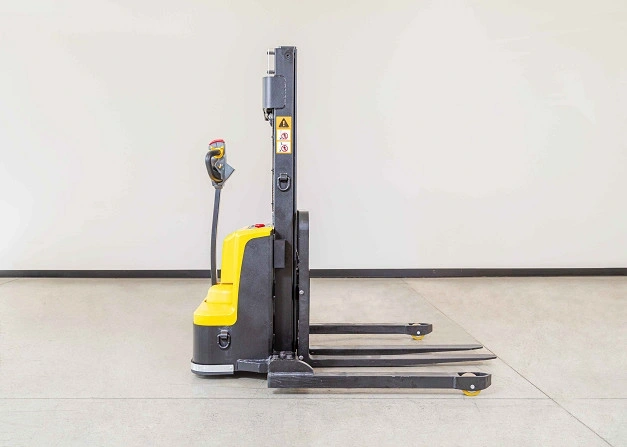
Walkie Stacker vs Forklift Licensing
Equipment licensing is a major operational factor when expanding your fleet or bringing on extra help during busy periods. Having employees being able to use equipment without requiring a licence is a big plus, especially during peak periods.
➡️ Walkie Stacker
A walkie stacker does not legally require a Class LF High Risk Work Licence (HRWL) under Safe Work Australia standards to operate. However, correct operator training and safety measures are always needed.
The Benefit: You can onboard casual staff, warehouse assistants, or temp workers quickly with basic, site-specific operator training rather than waiting on external licensing tickets.
➡️ Counterbalance Forklift
All sit-down counterbalance forklifts, whether 3-wheel electric, 4-wheel electric, gas, or diesel, strictly require the operator to hold a current Class LF High Risk Work Licence. Operating without one creates significant legal and safety risks for your site.
Key Operational Differences Between A Walkie Stacker and A Counterbalance Forklift
➡️ Walkie Stacker
✔️ Can fit down narrow aisles that are as narrow as 3.0 - 2.5 meters wide, therefore maximising indoor storage density
✔️ A walkie stacker is ideal to handle light to medium pallet loading (under 2 tonnes) across manufacturing floors, retail stockrooms, and light industrial units.
✔️ Walkie stackers are cheaper to buy outright as well as lower weekly rental rates making them a great investment for busy periods.
✔️ Perfect for businesses that have intermittent lifting where you move stock periodically rather than continuously.
➡️ Counterbalance Forklift
✔️ If your job sites require outdoor work, ramps, and rough surfaces such as gravel, then a sit-down counterbalance forklift has higher ground clearance, pneumatic or solid rubber tyres, and the traction needed to navigate these requirements.
✔️ Counterbalance forklifts are great for unloading delivery trucks and containers as they provide the necessary reach, speed, and weight balance.
✔️ Forklifts are necessary if you are lifting pallets over 2 tonnes or handling bulky, irregular goods as the counterbalance provides chassis stability
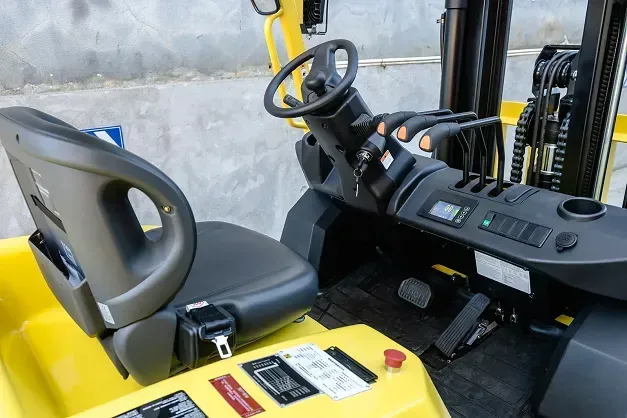
✔️ Forklifts provide ergonomic seating, intuitive controls, and weather protected cabins that keep operators comfortable if they are using the equipment for full working shifts.
Power Outlets and Running Costs
➡️ Walkie Stacker
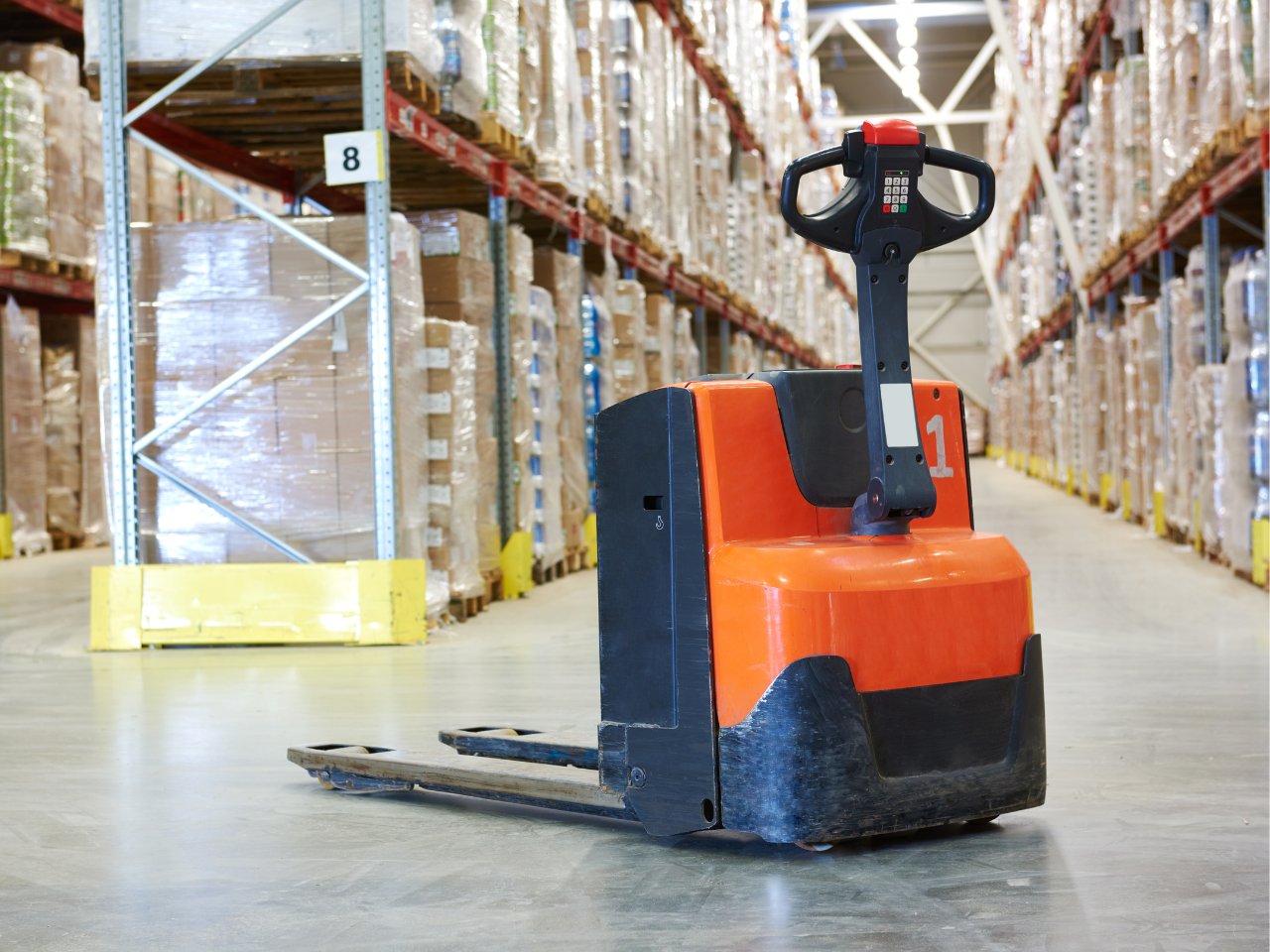
Most electric walkie stackers come with a built-in charger that plugs straight into a standard 240V wall socket. You don't need any special electrical work done—just roll it in and plug it in overnight.
➡️ Counterbalance Forklift
Electric sit-down forklifts run on much larger industrial batteries that usually require a 3-phase power point or a dedicated charging station. If you go with gas or diesel, you'll need to arrange regular fuel deliveries.
Forklift Hire or Sales? Finding The Best Solution For Your Job Site and Budget
At Forklogic, we provide flexible equipment solutions tailored to your operational goals and cash flow:
New & Used Forklift Sales
Investing in a new or quality pre-owned machine is best for permanent, multi-shift facilities where equipment is running continuously year-round.
Short-Term Forklift Hire
Ideal for clearing seasonal stock overflows, temporary project work, or bridging the gap while existing machinery is serviced.
Long-Term Rental & Lease-to-Own
Gives you access to the latest machinery with zero upfront capital strain. Full servicing and routine maintenance are built into your agreement, ensuring predictable monthly overheads.
Walkie Stacker vs Forklift Comparison
|
What You Need to Know |
Walkie Stacker |
Counterbalance Forklift |
|
Best Terrain |
Flat, smooth indoor concrete |
Indoor warehouses, outdoor yards, ramps & gravel |
|
Aisle Width Needed |
Very narrow (2.0m – 2.5m) |
Standard to wide (3.2m – 3.8m+) |
|
Max Lift Capacity |
Usually up to 1.5 – 2.0 tonnes |
1.8 tonnes up to 5.0+ tonnes |
|
Lift Height |
Standard 3.0m to 4.5m |
4.5m to 6.0m+ |
|
Licence Required? |
No HRWL needed (walk-behind models) |
Class LF Licence mandatory |
|
Power Outlet Needed |
Standard 240V wall plug |
3-Phase power (electric) or Gas/Diesel |
|
Delivery |
Easy & quick delivery |
Requires a standard tilt-tray truck |
Frequently Asked Questions (FAQs)
Is a walkie stacker cheaper to buy and maintain than a standard forklift?
Yes. Walkie stackers have fewer complex mechanical components than ride-on forklifts, resulting in lower initial purchase prices and reduced routine maintenance costs over time.
Can a walkie stacker be used to unload a truck outdoors?
Generally, no. Standard walkie stackers feature small polyurethane wheels and low ground clearance, making them unsafe for rough asphalt, gravel, or sloped loading ramps. A counterbalance forklift is much safer for outdoor truck unloading.
Does Forklogic deliver equipment directly to the site?
Yes. Whether you are buying a machine outright or arranging short/long-term hire, Forklogic provides Australia-wide delivery with rapid turnaround across Sydney, Brisbane, Newcastle, the Central Coast, and the Sunshine Coast.
Does a walkie stacker work with all types of pallets?
Not always. Standard walkie stackers have front outrigger legs that sit outside the pallet, allowing them to lift both open-bottom (Australian standard) and closed-bottom pallets. However, fork-over walkie stackers have legs directly underneath the forks, meaning they can only lift open-bottom pallets or skids. If your warehouse handles closed-bottom or double-sided timber pallets, you’ll need a straddle stacker or a counterbalance forklift.
How high can a walkie stacker reach compared to a counterbalance forklift?
Most standard walkie stackers reach lift heights between 3.0 to 4.5 metres, which is ideal for 2-to-3 tier warehouse racking. Sit-down counterbalance forklifts typically reach 4.5 to 6.0+ metres. If your facility features high-density racking above 5 metres, a counterbalance forklift (or an indoor reach truck) is the safer, more stable option.
Can I try a machine before committing to a permanent buy?
Yes! Through Forklogic’s Lease-to-Own program, you can rent a walkie stacker or counterbalance forklift to ensure it fits your site workflow. At the end of the term, you have the option to buy the machine outright.
What battery or charging infrastructure do these machines require?
Most electric walkie stackers come equipped with built-in chargers that plug directly into a standard 240V mains wall socket, requiring no additional electrical infrastructure. Sit-down electric counterbalance forklifts typically run on larger lead-acid or lithium-ion batteries that require dedicated 3-phase charging stations or high-output chargers.

Need Help Choosing the Right Equipment for Your Site?
Whether you need to buy new or used or arrange flexible hire options for either a walkie stacker or a counterbalance forklift, the team at Forklogic can help. Call us today on 1300 360 936 or fill out our online enquiry form for expert site advice and quick quotes.