Electric vs. LPG vs. Diesel Forklifts: Which Power Source is Right for Your Business?
Understanding and choosing which forklift power source is the best option for your business is a critical decision. Making the wrong choice can quickly become incredibly expensive, leading to unexpected operational downtime and decreased productivity simply because you aren't using the right equipment for your worksite. Deciding between an electric forklift, an LPG forklift, and diesel forklifts all comes down to your specific worksite conditions, your layout, and the exact types of jobs the machinery will be performing daily.
Whether you are looking for short-term forklift hire to handle a sudden seasonal peak or getting ready to buy a forklift to permanently scale up your operations, matching the fuel type to your environment is essential. At Forklogic, we want to help you avoid costly trial-and-error. Here is our practical guide breaking down the real-world pros, cons, and best-use cases for each forklift power source so you can make a confident investment for your business.
Electric Forklifts
🔋 Electric Forklift Overview
As the most modern option on the market, electric forklifts have advanced over recent years, proving they can match the performance of traditional diesel or LPG models. Thanks to their significantly lower long-term running costs and advanced built-in safety features, electric trucks have become the number one choice for many modern businesses.
Electric forklifts operate on advanced and rechargeable batteries. With no internal combustion engine, they are the quietest, cleanest, and most maneuverable trucks on the market.
🚧 Best Job Sites for Electric Forklifts
- Indoor Warehouses
- Tight Indoor Warehouses
- Warehouses with Narrow Aisles
- Cold Storage Rooms
- Food-Grade Facilities
- Indoor Spaces with Minimal Ventilation
👍 Electric Forklift Pros
- Zero exhaust emissions, making them ideal for indoor warehouses and enclosed workspaces.
- Lower running costs thanks to cheaper electricity and fewer moving engine parts.
- Less maintenance with no engine oil, filters, or fuel system servicing.
- Quiet operation, creating a safer and more comfortable working environment.
- Excellent manoeuvrability for narrow aisles and tight warehouse spaces.
👎 Electric Forklift Cons
- Requires battery charging, which can create downtime without spare batteries.
- Higher upfront purchase price than many LPG models.
- Less suited to rough outdoor terrain such as gravel, mud, and uneven surfaces.
- Lower maximum lifting capacity than comparable diesel forklifts.
✅ Types of Electric Forklifts
- Walkie Stackers
- Electric Reach Trucks
- 3 & 4 Wheel Battery Counterbalance Forklifts
LPG Forklifts
⛽ LPG Forklift Overview
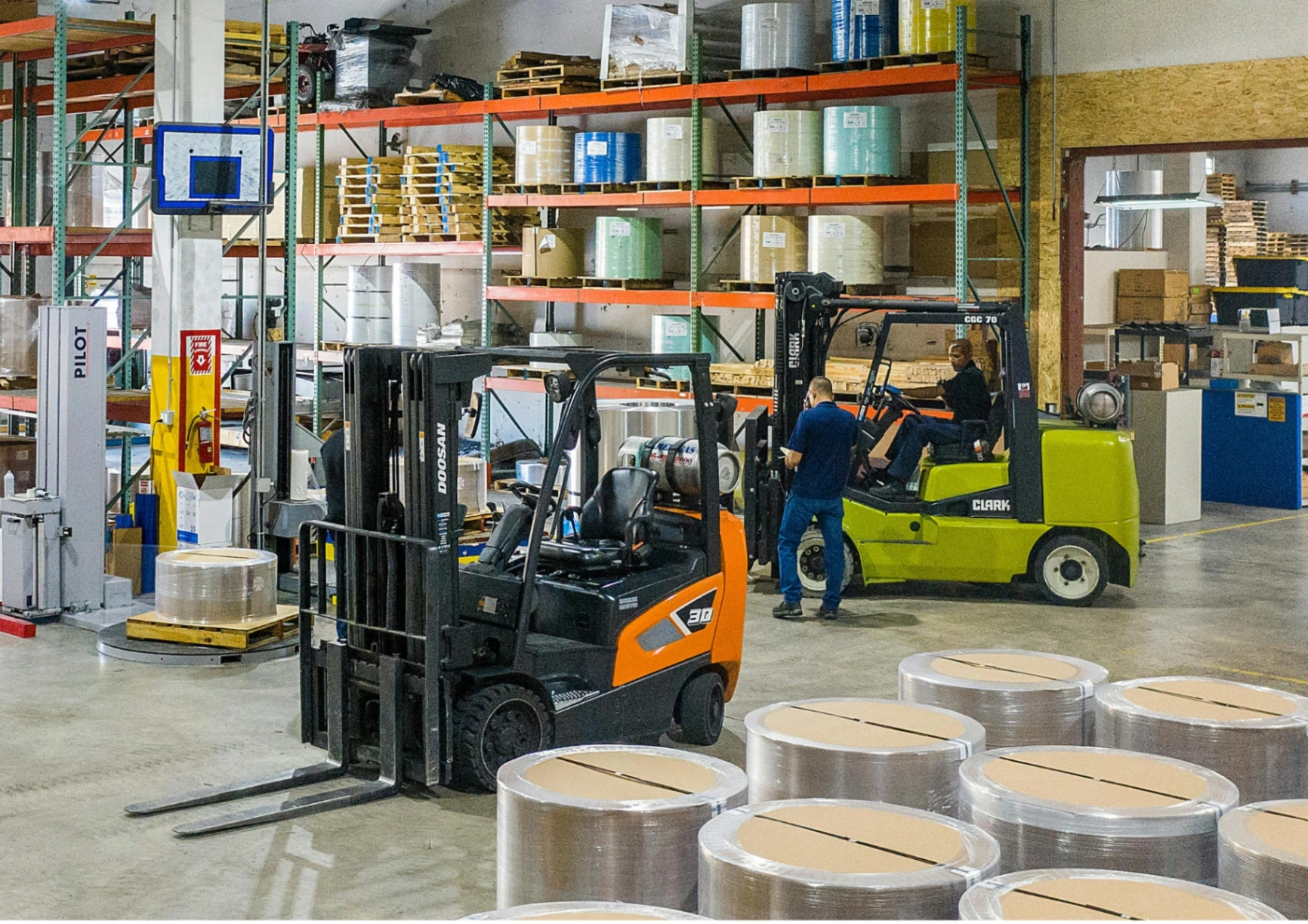
Liquefied Petroleum Gas (LPG) models are one of the most popular forklifts on the market today. They offer a much cheaper upfront purchase or rental cost than either diesel or electric alternatives which makes them highly attractive for businesses managing a strict budget. Because they can transition seamlessly between indoor and outdoor tasks, they are also highly adaptable.
🚧 Best Job Sites for LPG Forklifts
- Fast-Paced Logistic Hubs
- Cross-Docks
- Manufacturing Sites that require a single machine to move between indoor racking aisles and outdoor yards.
👍 LPG Forklift Pros
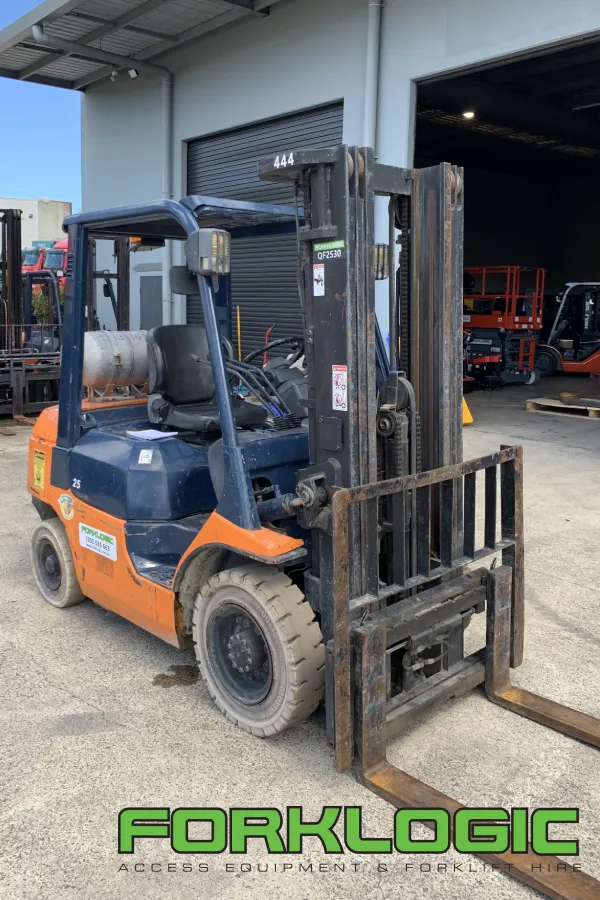
- Suitable for both indoor and outdoor use with proper ventilation.
- Fast refuelling by simply swapping the gas cylinder.
- Lower purchase and hire costs than many electric forklifts.
- Strong lifting performance for general warehouse and yard work.
- No charging downtime, making them ideal for continuous operation.
👎 LPG Forklift Cons
- Produces exhaust emissions, requiring adequate ventilation when used indoors.
- Fuel prices can fluctuate, making running costs less predictable.
- Higher maintenance requirements than electric forklifts due to the combustion engine.
- Less lifting power than diesel forklifts for heavy-duty applications.
- Gas cylinders need replacing, requiring operators to monitor fuel levels and keep spare bottles on hand.
✅ Types of LPG Forklifts
- Standard Counterbalance Gas Forklifts
- Compact Cushion Tyre Gas Forklifts
Diesel Forklifts
⛽ Diesel Forklift Overview
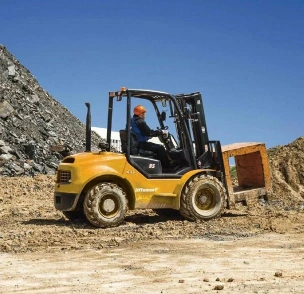
Diesel forklifts are incredibly powerful machines specifically engineered for high-intensity outdoor use. On average, their advanced internal combustion engines deliver significantly higher torque than electric models and boast much better fuel efficiency than their LPG counterparts under heavy loads. Because of their engine noise and exhaust emissions, diesel trucks are strictly built to suit outdoor applications, an environment where they will generally out-perform both gas and electric alternatives every time.
🚧 Best Job Sites for Diesel Forklifts
- Rugged Outdoor Worksites
- Industrial Shipping Ports
- Timber Yards
- Construction Zones
- Mining Sites
- Moving Heavy Structural Machinery
👍 Diesel Forklift Pros
- Highest lifting capacity for heavy-duty applications.
- Powerful performance on steep, uneven, and rugged terrain.
- Quick refuelling keeps downtime to a minimum.
- Built for demanding outdoor worksites such as construction, ports, and timber yards.
- Reliable for long operating hours under heavy workloads.
👎 Diesel Forklift Cons
- Produces high exhaust emissions, making them unsuitable for most indoor workplaces.
- Noisier operation than electric or LPG forklifts.
- Higher maintenance costs due to engine servicing and mechanical components.
- Requires more operating space because of its larger size and turning circle.
- Higher environmental impact with greater carbon emissions than electric alternatives.
✅ Types of Diesel Forklifts
- Heavy-Duty Counterbalance Diesel Forklifts
- Rough Terrain & 4x4 Forklifts
- Telehandlers (Telescopic Handlers)
Electric vs. LPG vs. Diesel Forklifts: At a Glance
|
Feature |
Electric Forklifts |
LPG Gas Forklifts |
Diesel Forklifts |
|
Best For: |
Warehouses, distribution centres, cold storage, food-grade facilities |
Mixed indoor & outdoor operations |
Construction sites, ports, timber yards, mining and heavy industry |
|
Primary Environment |
Mainly indoors (can operate on smooth outdoor surfaces) |
Indoor & Outdoor |
Outdoors Environments |
|
Upfront Asset Cost |
Higher Initial Investment |
Lower Initial Investment |
Moderate Investment |
|
Ongoing Running Costs |
Lowest (Electricity) |
Moderate (Cylinder Swaps) |
Higher (Fuel Price Volatility) |
|
Maintenance Needs |
Lowest (Few moving parts) |
Moderate (Engine servicing) |
Highest (Heavy-duty filters/oil) |
|
Refuel / Recharge Time |
1 to 8 Hours (Battery dependent) |
< 5 Minutes (Cylinder swap) |
< 5 Minutes (Bowser refuel) |
|
Indoor Air Quality |
Excellent (Zero emissions) |
Good (Ventilation required) |
Poor (Exhaust emissions) |
|
Noise Levels |
Quiet |
Moderate |
Loud |
|
Lifting Capacity |
Good |
Very Good |
Excellent |
Which Forklift Should You Choose?
The right forklift depends on where you'll be working, what you'll be lifting, and how often the machine will be used. Here's a quick guide to help you narrow down the best option for your business.
Looking to Reduce Running Costs? Choose an Electric Forklift
✅ You mainly operate indoors
✅ You work in narrow warehouse aisles
✅ You need zero exhaust emissions
✅ Reducing running and maintenance costs is a priority
✅ You operate in food-grade, pharmaceutical, or cold storage facilities
Best for: Warehouses, distribution centres, retail storage, food manufacturing, and indoor logistics.
Need One Forklift for Indoor and Outdoor Work? Choose an LPG Forklift
✅ You need one forklift for both indoor and outdoor work
✅ You want fast refuelling with minimal downtime
✅ You need more lifting power than an electric forklift
✅ You're looking for a cost-effective all-round solution
Best for: Manufacturing facilities, logistics hubs, freight depots, wholesalers, and businesses moving between warehouses and outdoor loading areas.
Need Maximum Power for Heavy-Duty Work? Choose a Diesel Forklift
✅ You regularly lift heavy loads
✅ You work on construction sites or rough terrain
✅ Your forklift operates almost exclusively outdoors
✅ You need maximum power and long operating hours
Best for: Construction sites, timber yards, ports, mining operations, agricultural businesses, and heavy industrial worksites.
FAQs About Electric, LPG and Diesel Forklifts
Can an LPG forklift be used indoors?
Yes, but only in well-ventilated areas. LPG forklifts produce exhaust emissions, so they aren't suitable for enclosed spaces with poor airflow. For warehouses, food production facilities, or cold storage, an electric forklift is usually the safer and more practical choice.
How long does an electric forklift battery last?
Most modern electric forklifts can operate for 6 to 8 hours on a full charge, depending on the workload. Many lithium-ion models also support fast charging during breaks, helping reduce downtime across longer shifts.
Are electric forklifts as powerful as LPG or diesel forklifts?
For most warehouse and indoor applications, yes. Electric forklifts provide excellent lifting performance and instant torque. However, if you're regularly moving very heavy loads or working on rough outdoor terrain, an LPG or diesel forklift may be the better option.
Which forklift has the lowest maintenance costs?
Electric forklifts generally require the least maintenance because they have fewer moving parts and no engine oil or fuel system to service. LPG and diesel forklifts need more regular engine maintenance, which can increase servicing costs over time.
Do I need a different forklift licence to operate an electric forklift?
No. In Australia, an LF High Risk Work Licence allows you to operate standard electric, LPG, and diesel counterbalance forklifts. Your employer may still provide site-specific training before you use a different forklift model.
Which forklift is the cheapest to run?
Electric forklifts usually have the lowest running costs thanks to lower energy costs and reduced maintenance. LPG forklifts offer a good balance of performance and flexibility, while diesel forklifts are often the best choice for heavy-duty outdoor work.
Is it better to buy or hire a forklift?
Forklift hire is often the best option for short-term projects, seasonal demand, or businesses wanting to avoid large upfront costs. Purchasing a forklift is usually more cost-effective for long-term, everyday use. The right choice depends on your budget, workload, and how often the forklift will be used.

Still Not Sure Which Forklift Is Right for You?
Every workplace is different, and choosing the right forklift can improve productivity, reduce running costs, and keep your team working safely. Whether you need short-term forklift hire, long-term rental, or you're ready to purchase a forklift, the team at Forklogic can recommend the best solution for your business. Call us today on 1300 360 936 or contact us online to speak with one of our forklift specialists.