What Forklift Does Your Warehouse Actually Need?
Choosing the Right Forklift for a More Efficient Warehouse
A busy working warehouse depends on more than shelves, stock and staff. You need the right equipment to move pallets, load deliveries, stack goods and keep products flowing without unnecessary delays.
And our team at Forklogic understands that is where forklifts come in. The right warehouse forklift can make everyday material handling faster, easier and more efficient. But not every forklift is suited to every warehouse.
From electric forklifts for indoor operations to reach forklifts for high racking and compact walkie stackers for tighter spaces, there are different options for different jobs.
So, how do you know which forklift is right for your warehouse? Let’s look at the most common warehouse forklifts, what they’re designed for and what to consider before choosing one.
Why Are Forklifts So Important in a Warehouse?
Warehouses are constantly moving. Pallets arrive, stock needs to be stored, orders need to be picked and finished goods need to leave on time. Without the right material handling equipment, these everyday jobs can quickly become slower, more labour-intensive and harder to manage.
A forklift can take care of many of the heavy lifting and movement tasks that keep a warehouse running, including:
- Moving pallets: Quickly transport heavy or palletised goods around the warehouse.
- Loading and unloading: Move goods efficiently between trucks, loading docks and storage areas.
- Stacking stock: Lift pallets onto racking and make better use of vertical storage space.
- Retrieving goods: Access stock stored at different heights and locations.
- Moving heavy loads: Handle materials that would be difficult or unsafe to move manually.
But choosing any forklift isn't enough. The best option depends on your warehouse layout, available space, load requirements, lifting height and how often the equipment will be used.
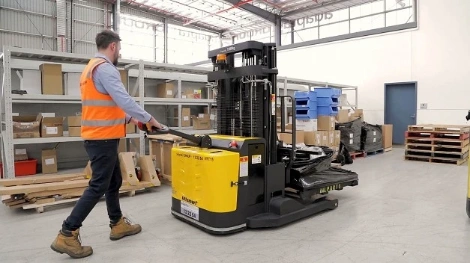
What Types of Forklifts Are Used in Warehouses?
Not every warehouse operates the same way, so the right forklift depends on the space you have, what you're moving and how you need to move it. From everyday pallet handling to high-level storage, different forklifts are designed for different warehouse tasks.
Electric Forklifts
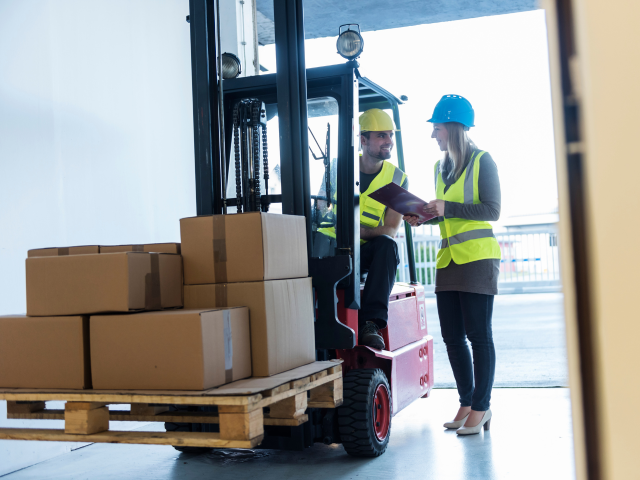
Electric forklifts are a popular choice for indoor warehouses thanks to their quiet operation, smooth handling and zero onsite exhaust emissions. They're well suited to moving, loading and stacking palletised goods across busy warehouse environments.
Counterbalance Forklifts
Counterbalance forklifts are a versatile option for general warehouse material handling. Their design allows them to lift and transport pallets without requiring support legs, making them useful for loading, unloading and moving goods around open warehouse areas.
Reach Forklifts
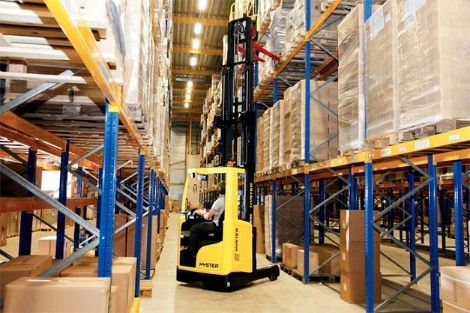
Reach forklifts are designed for warehouses where storage space needs to be maximised vertically. Their ability to reach into racking makes them particularly useful for high-bay storage and narrower warehouse aisles.
Order Picker Forklifts
Order picker forklifts are designed for picking individual products from elevated shelving and racking. They're commonly used in warehouses and distribution centres where operators need regular access to stock stored at different heights.
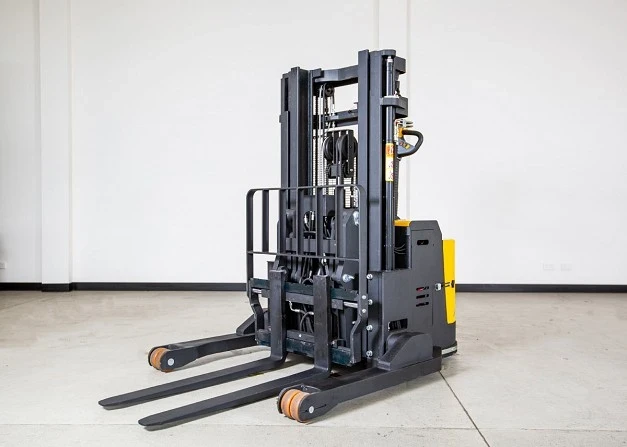
Walkie Stackers
Walkie stackers provide a compact solution for moving and stacking pallets without the footprint of a traditional forklift. They're particularly useful in smaller warehouses, storage areas and applications where manoeuvrability is important.
Pallet Jacks
Pallet jacks are designed for straightforward movement of palletised goods across relatively flat warehouse surfaces. They're a practical option for short-distance pallet movement where lifting pallets onto high racking isn't required.
Rough Terrain Forklifts
While standard warehouse forklifts are designed for smooth indoor surfaces, rough terrain forklifts are built for uneven outdoor environments. They can be useful for warehouses with outdoor storage areas, yards or loading zones where additional traction and ground clearance are required.
How Do You Choose the Right Forklift for Your Warehouse?
Choosing a forklift isn't just about finding a machine that can lift your heaviest pallet. The right equipment needs to suit your warehouse layout, storage system, loads and day-to-day workflow.
Before choosing a warehouse forklift, consider these key factors:
▪️What Are You Lifting?
Start with the weight, size and type of loads you'll be handling. Your forklift needs enough capacity to safely lift your typical loads without being oversized for the job.
▪️How High Do You Need to Lift?
If your warehouse uses tall pallet racking, you'll need a forklift capable of reaching the required storage height. Consider both your maximum lifting height and the dimensions of your racking system.
▪️How Much Space Do You Have?
Warehouse aisles, doorways and turning areas can determine which forklift is practical for your site. Compact equipment can be a better option where space is restricted or manoeuvrability is important.
▪️Will You Be Working Indoors or Outdoors?
The operating environment matters. Electric forklifts are commonly suited to indoor warehouses, while diesel and rough terrain forklifts may be more appropriate for outdoor areas and uneven surfaces.
▪️How Often Will You Use the Forklift?
Think about your daily workload and how frequently you'll need the equipment. Occasional or project-based requirements may make forklift hire practical, while businesses with ongoing material handling needs may benefit from purchasing.
▪️What Does Your Warehouse Workflow Look Like?
Consider where goods arrive, where they're stored and how they move through the warehouse. The right forklift should make these movements easier and support your existing workflow rather than create additional obstacles.
Not sure which forklift is right for your warehouse? Forklogic can help you assess your requirements and find equipment suited to your application.
Understanding Forklift Capacity & Lifting Height
Two of the most important things to consider when choosing a warehouse forklift are how much it can safely lift and how high it can lift it. Getting these requirements right helps ensure the forklift is suitable for your warehouse, racking system and typical loads.
▪️Forklift Load Capacity
Forklift capacity refers to the maximum weight the machine is designed to safely lift under specified conditions. The capacity you need will depend on the weight and dimensions of the loads you're handling.
It's important to consider your heaviest typical load, rather than choosing a forklift based only on the average weight of your pallets.
▪️Forklift Lifting Height
If you're storing pallets on racking, you'll need to consider how high the forklift needs to lift the load. Your required lifting height will depend on the height of your racking, warehouse ceiling and the clearance available above stored goods.
A forklift with the right lifting height can make it easier to use vertical storage space efficiently while keeping loading and stacking operations practical.
▪️Load Size & Load Centre
Weight isn't the only consideration. The size and position of a load can affect how a forklift performs and how much it can safely lift. Larger or unevenly distributed loads may require specific equipment or attachments.
If you're unsure what capacity or lifting height you need, speak with the Forklogic team about your warehouse requirements before choosing your equipment.
How Can the Right Forklift Improve Warehouse Efficiency?
A forklift isn't just there to move heavy loads from one place to another. The right equipment can become an important part of your warehouse workflow, helping your team move goods efficiently and make better use of the space available.
✅Move Goods Faster
The right forklift can make it easier to move pallets between loading areas, storage locations and picking zones, helping keep stock flowing through the warehouse.
✅Make Better Use of Vertical Space
Forklifts designed for high-level lifting can help warehouses take advantage of vertical racking and increase available storage without expanding their floor space.
✅Reduce Unnecessary Manual Handling
Moving heavy or bulky goods manually can take time and place additional demands on warehouse staff. Suitable material handling equipment can take care of heavier loads and make everyday tasks more efficient.
✅Improve Loading & Unloading
The right forklift can speed up the movement of goods between trucks, loading docks and warehouse storage areas, helping reduce delays during deliveries and dispatch.
✅Keep Your Workflow Moving
When your forklift suits your warehouse layout, load requirements and daily workload, routine material handling becomes easier and more predictable. Choosing the right equipment can help reduce unnecessary movement and keep your operation running smoothly.
What Should You Know About Warehouse Forklift Safety?
Forklifts are powerful pieces of equipment, so choosing the right machine is only part of running a safe warehouse. The forklift, operator, load and working environment all need to be considered to help keep people and equipment safe.
🚧Use the Right Forklift for the Job
A forklift should be suitable for the load, lifting height, warehouse layout and operating environment. Using equipment outside its intended application can create unnecessary risks.
🚧Don't Exceed the Forklift's Capacity
Always consider the weight, dimensions and position of the load before lifting. The forklift's rated capacity should be appropriate for the load being handled.
🚧Keep Pedestrian Areas Clear
Warehouses often have forklifts, workers and visitors operating in the same space. Clearly defined pedestrian areas and sensible traffic management can help reduce the risk of collisions.
🚧Carry Out Pre-Start Checks
Regular checks can help identify obvious issues before equipment is put into operation. Operators should follow the manufacturer's requirements and workplace procedures for inspections and safe use.
🚧Keep Loads Stable
Loads should be positioned and secured appropriately before moving. Avoid carrying unstable or poorly balanced loads that could shift during transport.
🚧Provide Appropriate Operator Training
Forklift operators need the appropriate training, licensing and workplace authorisation for the equipment they operate. Safe forklift operation should always be treated as a priority.
Can Forklift Attachments Improve Warehouse Handling?
Forklift attachments can make your equipment more versatile by allowing it to handle different types of loads and materials. Depending on the application, options can include fork extensions, replacement forklift tines, drum handlers and jib attachments.
The right attachment can help improve handling efficiency while reducing the need for specialised equipment. Always ensure attachments are suitable for the forklift and the load being handled.
Warehouse Forklift FAQs
▪️What Type of Forklift Is Best for a Warehouse?
The best forklift depends on your warehouse layout, load requirements, lifting height and available space. Electric forklifts are commonly suited to indoor warehouses, while reach, counterbalance and order picker forklifts can suit different storage and handling requirements.
▪️Are Electric Forklifts Good for Warehouses?
Yes. Electric forklifts are commonly used in indoor warehouses because they offer quiet operation, smooth handling and zero onsite exhaust emissions. They're particularly useful where noise and air quality are important considerations.
▪️What Forklift Is Best for Narrow Aisles?
Reach forklifts and other compact forklift types can be suitable for warehouses with narrow aisles and high-level racking. The right choice will depend on your aisle width, racking configuration and required lifting height.
▪️How Much Weight Can a Warehouse Forklift Lift?
Forklift lifting capacity varies depending on the machine and its configuration. The correct capacity depends on factors including the load weight, dimensions, load centre and lifting height.
▪️What Forklift Do I Need for High Racking?
Warehouses with high-level racking generally require a forklift capable of reaching the required storage height. Reach forklifts are commonly used for high racking, although the right equipment will depend on your warehouse layout and racking system.
▪️What Is the Difference Between a Forklift and a Pallet Jack?
A forklift can lift, stack and transport pallets at different heights, while a pallet jack is primarily designed to move pallets horizontally across the floor. Pallet jacks are useful for straightforward pallet movement where high-level lifting isn't required.
▪️How Often Should a Warehouse Forklift Be Serviced?
Forklift servicing should follow the manufacturer's recommendations and the requirements of your workplace. Regular inspections and preventative maintenance can help identify issues early and reduce unexpected downtime.
▪️What Forklift Attachments Can Be Used in a Warehouse?
Common forklift attachments include fork extensions, replacement tines, drum handling attachments and jib attachments. The appropriate attachment depends on the type, size and weight of the load being handled.

Choosing The Right Forklift Can Change How Your Warehouse Works
The right forklift can make a noticeable difference to how efficiently your warehouse operates. From electric and counterbalanced forklifts to reach trucks, order pickers and walkie stackers, the best option depends on your loads, storage system, available space and day-to-day requirements.
Taking the time to choose equipment that suits your warehouse can help improve material handling, make better use of storage space and keep your workflow moving.
If you're looking for warehouse forklifts, Forklogic offers a range of forklifts for hire and sale to suit different applications and working environments.