3-Wheel vs 4-Wheel Counterbalance Forklifts: Which is Right for Your Site?
Choosing between a 3-wheel vs 4-wheel counterbalance forklift isn't just about personal preference, it can directly impact your site's spatial layout, daily throughput, and operating costs. While 3-wheel electric forklifts are engineered for ultimate maneuverability in tight warehouse aisles, 4-wheel forklifts deliver the stability and capacity required for heavy lifting and outdoor yards.
In this guide, our team at Forklogic breaks down the key differences in turning radius, load capacity, safety, and application environments to help you select the exact forklift design for your site requirements.
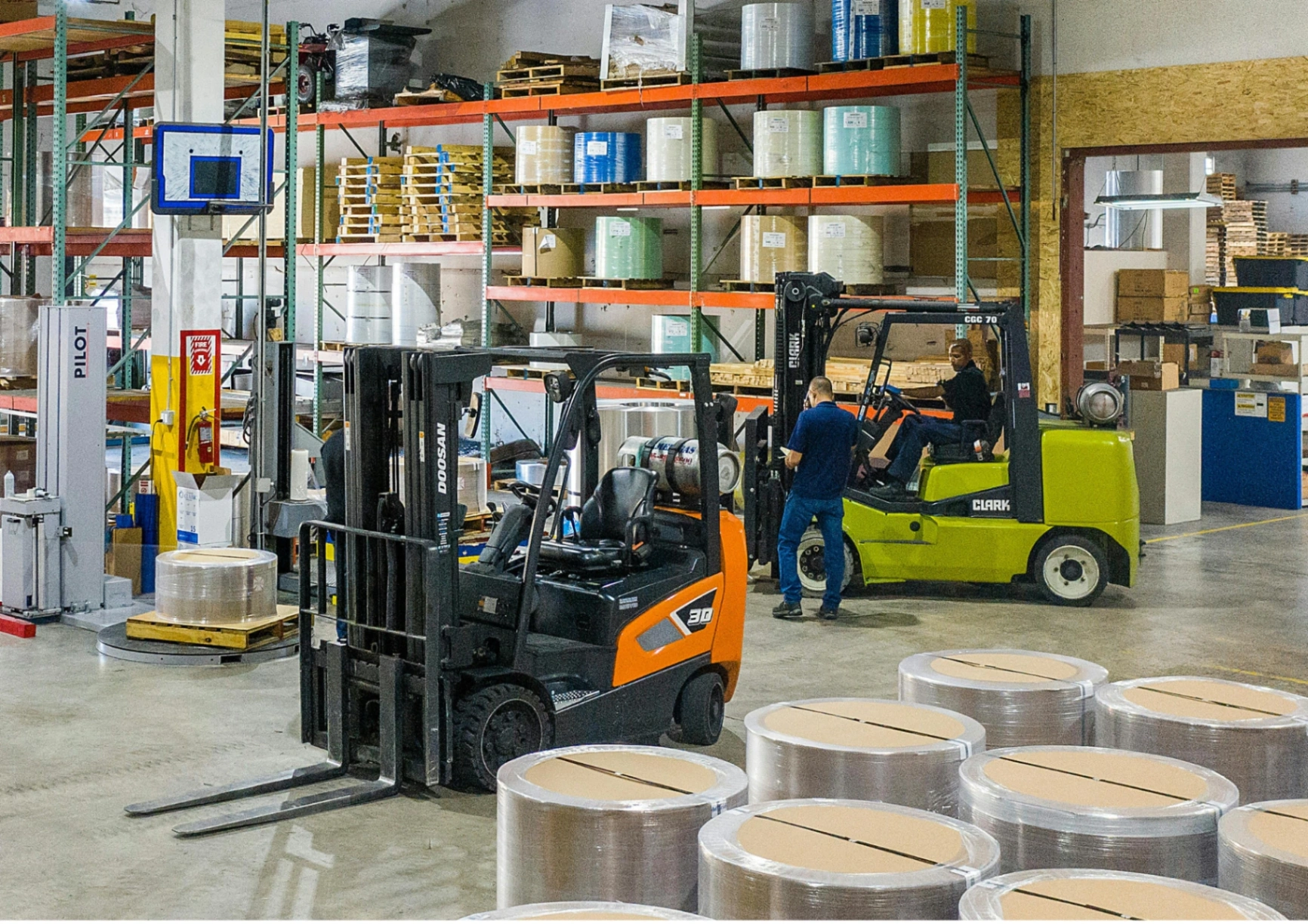
Key Differences Between 3-Wheel and 4-Wheel Forklifts: Design, Agility & Efficiency
There are key differences between the 3-wheel forklift and a 4-wheel forklift such as their turning radius and how they are used in small spaces and warehouses as well as energy and operating efficiencies and load capacities.
Turning Radius & Space Utilisation
🔹 3-Wheel Forklift
A 3-wheeled forklift uses a single rear wheel which then gives them a much smaller and tighter turning radius which makes them an ideal forklift for tight spaces and narrow aisles in warehouses
🔹 4-Wheel Forklift
4-wheel forklifts have a larger turning circle while still offering rear-wheel steering, but the added wheelbase can limit sharp turns in tight spaces.
Stability and Load Handling
🔹 3-Wheel Forklift
3-wheel model forklifts are great on smooth and level surfaces that carry lighter or moderate loads. These are common in warehouse and indoor distribution facilities.
🔹 4-Wheel Forklift
4-wheel forklifts provide greater stability because of their broader wheelbase and evenly distributed support. This makes them able to carry heavier loads, mixed with indoor-outdoor operations and environments with varying floor surfaces.
Energy & Operating Efficiency
🔹 3-Wheel Forklift
3-wheel forklifts work at their best indoors in high-density warehouses and storage facilities that have narrow aisles and smooth surface floors.
🔹 4-Wheel Forklift
4-wheel forklifts are much more versatile and can be used in small warehouses, larger distribution centres, mixed indoor-outdorr yards, and operations that require heavier lifting.
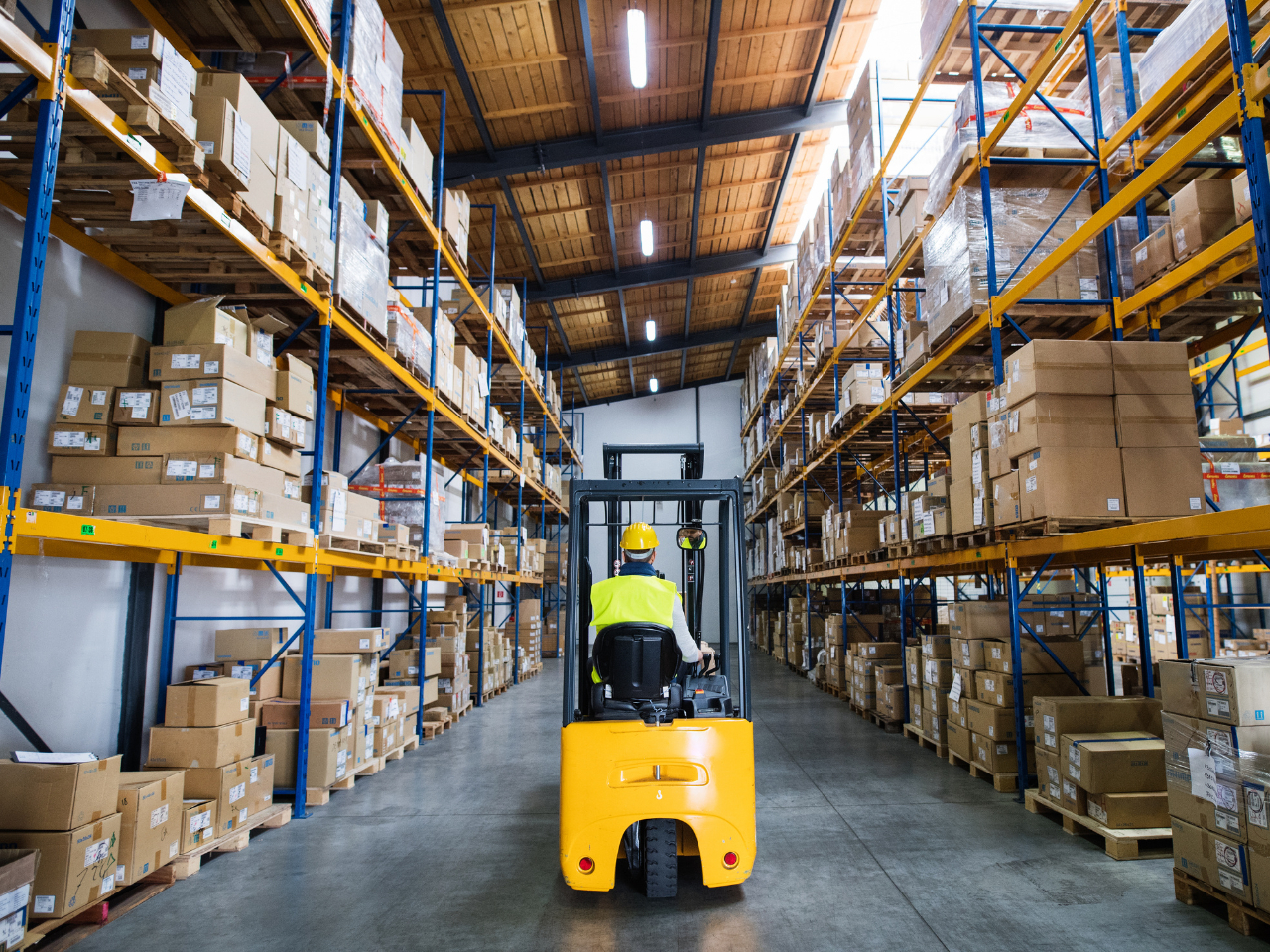
What Are the Safety Considerations for 3-Wheel vs 4-Wheel Forklifts?
Safety is non-negotiable on any job site. Before deciding between a 3-wheel and 4-wheel forklift. Safety comes down to how a forklift balances its weight. Because 3-wheel and 4-wheel forklifts steer and balance differently, they carry different safety considerations on site. Keep these critical safety factors in mind:
The "Stability Triangle" Explained
Both types of forklifts balance like a seesaw, but their base on the ground is shaped differently:
- 3-Wheel Forklifts (Triangular Base): With two wheels at the front and one at the back, the base forms a triangle. This makes them great at turning in small spaces, but the back end has less side-to-side balance. Operators need to slow down when turning, especially if carrying a high load, to prevent the machine from tipping sideways.
- 4-Wheel Forklifts (Square Base): Having four wheels gives the machine a wide, square base. This extra wheel at the back makes the truck much sturdier and far less likely to tip over during sharp turns or sudden moves.
Ground & Surface Safety
Where you drive the forklift makes a huge difference to safety:
- Flat Indoor Concrete: 3-wheel models perform great on smooth, indoor floors. However, hitting a deep pothole, a speed bump, or floor debris with a single rear wheel can jolt the steering wheel or make the ride bumpy and unstable.
- Ramps, Slopes & Outdoor Yards: If your drivers need to use loading dock ramps, drive on slopes, or go outside onto uneven asphalt or gravel, a 4-wheel forklift is much safer. Having four points of contact with the ground gives the driver far better traction, braking power, and balance.
How to Choose the Right Forklift for Your Warehouse
Choose a 3-Wheel Forklift if:
- Your warehouse has narrow aisles, tight corners, or high-density shelving. The compact 3-wheel forklift has a compact chassis for tight turning while maximising space usage.
- If you have lighter loads generally under 2 tonnes and general pallet handling, a 3-wheel forklift option is both efficient and cost effective
- If your warehouse and operations involve frequent pallet movement in a confined indoor space, the agile 3-wheel forklift will help with rapid movement of stock while reducing manoeuvring times.
- If your goal in your environment is to reduce maintenance while having a quieter operation, then the 3-wheel forklift can help you achieve this.
Choose a 4-Wheel Forklift if:
- Your aisles are wide with room to manoeuvre or if you are expecting to use the forklift in both your warehouse and the outside yard. The 4-wheel forklift offers greater flexibility.
- If you have heavy, bulky, and irregular loads, or frequent stacking and unstacking at higher shelves, then the 4-wheel forklift model can provide better stability and load-bearing capability.
- If your job site requires outdoor movements or mixed-floor surfaces, the 4-wheel has versatility to combat these job site conditions.
- For heavier workloads or outdoor/rough surface tasks, a 4-wheel forklift, possibly with internal combustion or robust electric drive, may offset the higher maintenance or energy use with reliability and flexibility.
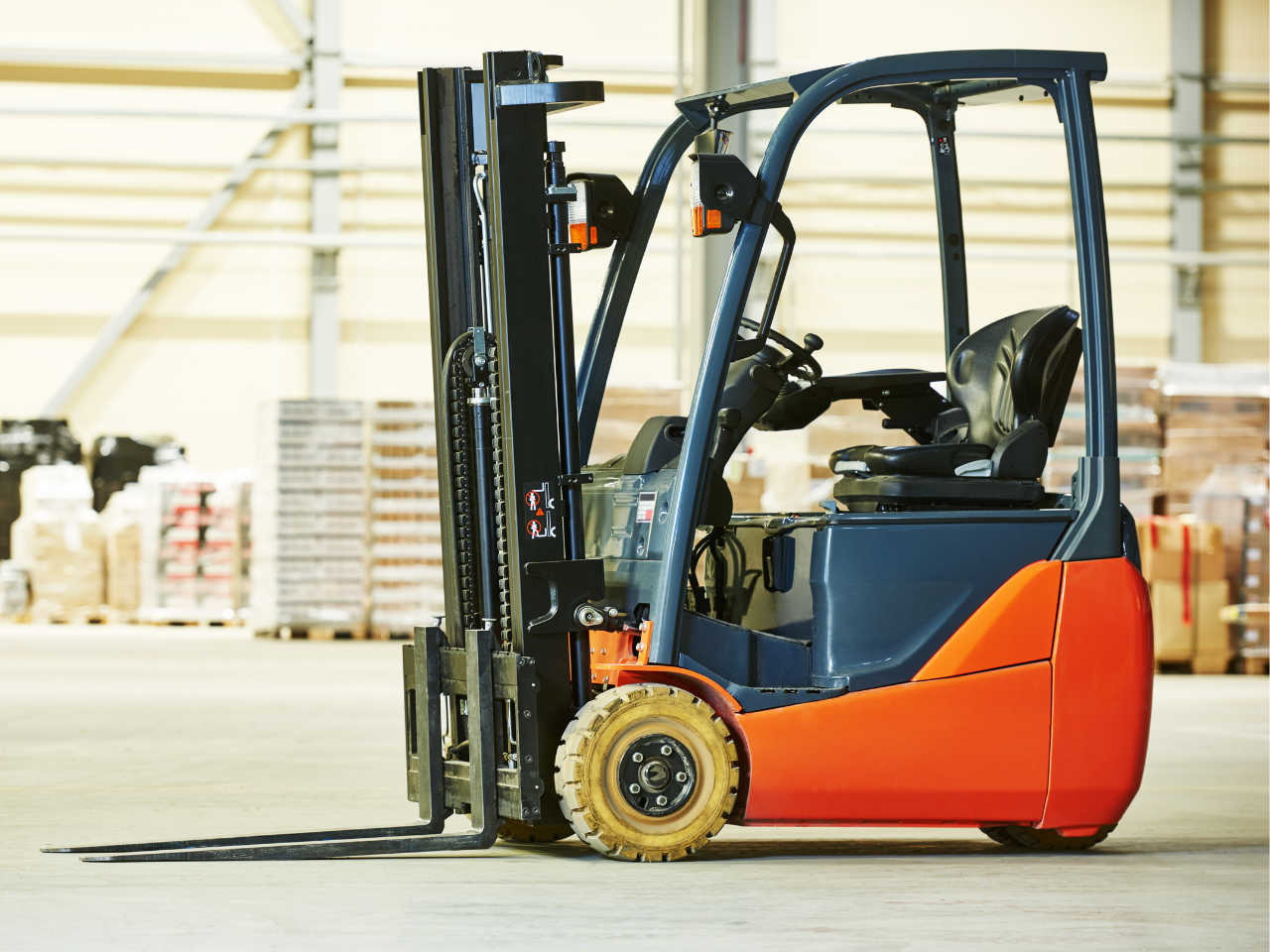
What Features Should You Look for When Buying a Forklift?
Capacity & Lift Height Specs
Always match the machine’s rated capacity to your heaviest pallets and highest racking levels. Remember to check the capacity and how much weight the forklift can safely lift when the mast is fully extended. Modern electric fleets come in a wide range of weight classes, making it easier to pair the exact machine to your daily duty cycle.
Battery & Power Technology
For indoor and multi-shift operations, electric forklifts deliver zero site emissions, quiet operation, and significantly lower lifetime fuel costs. When evaluating electric models, consider battery technology options:
- Lead-Acid: A cost-effective, proven option for standard single-shift operations.
- Lithium-Ion: Fast, opportunity-charging capabilities ideal for continuous multi-shift workflows without battery swaps.
Ergonomics & Driver Comfort
A comfortable driver is a productive driver. Look for features that minimize fatigue over long shifts, such as:
- Fully adjustable suspension seating.
- Intuitive fingertip joysticks or mini-wheel steering.
- Dual-pedal drive systems for seamless shifting between forward and reverse.
- Vibration-isolated cabs and spacious footwells.
Safety Systems
Safety should always be built into the machine's design. Essential safety options to look out for include:
- High-Visibility Masts: Slim mast profiles and clear-view overhead guards for unobstructed sightlines.
- Automatic Speed Reduction: Systems that automatically slow the machine down when taking sharp turns (Curve Assist).
- Load-Sensing & Stability Controls: Tech that monitors tilt angles and load weights to actively prevent tipping accidents.
- Pedestrian Warning Lights: Visual projection systems (like blue spot lights or LED boundary lines) to alert nearby foot traffic in busy warehouse aisles.
3-Wheel Forklift and 4-Wheel Forklift FAQs
Can a 3-wheel forklift be used outdoors?
Because 3-wheel forklifts have a single pivot wheel at the back, driving over potholes, gravel, or rough outdoor surfaces can make the machine unstable or cause severe steering jolts. For outdoor yards, loading docks, or unpaved areas, a 4-wheel forklift is much safer and more reliable.
Are 3-wheel forklifts less stable than 4-wheel forklifts?
All modern 3-wheel forklifts are engineered and tested to strict safety standards. However, because their base is shaped like a triangle rather than a square, operators need to take corners more carefully especially when carrying loads at height to prevent side-to-side tipping risks.
What is the maximum load capacity for a 3-wheel forklift?
Most 3-wheel electric forklifts are designed for light-to-medium loads, usually capped at 2 tonnes. If your site regularly handles pallets over 2 tonnes you will need a 4-wheel counterbalance forklift.
How much aisle space do I save with a 3-wheel forklift?
A 3-wheel forklift can turn almost within its own footprint, allowing you to operate in narrow aisles. By comparison, standard 4-wheel models typically require aisles of 3.5m wider to turn and stack pallets safely.
Are 3-wheel forklifts cheaper to run than 4-wheel models?
Yes, in most indoor environments. 3-wheel forklifts are predominantly electric, lighter in design, and have fewer moving parts in the steering assembly. This translates to lower initial purchasing or hiring costs, reduced energy consumption, and lower routine maintenance bills over time.
Should I rent or buy a 3-wheel vs 4-wheel forklift for my site?
It depends on your site layout and project duration:
- Forklift Hire: Ideal for temporary stock overflows, seasonal indoor warehouse peaks, or tight retail fit-outs.
- Buy a Forklift: Best for permanent operations, heavy manufacturing, indoor-outdoor yard work, or multi-shift site environments.

Still Unsure Which Counterbalance Forklift Model Fits Your Warehouse Layout?
Contact the Forklogic team today on 1300 360 936 or fill out our online enquiry form for expert site advice and quick hire quotes.