The Complete Guide to Warehouse Forklifts: Types, Sizes & Selection
Is an Inefficient Forklift Fleet Slowing Down Your Warehouse Logistics?
Managing a high-volume warehouse means understanding the right tools and machinery that is needed to run your business proficiently. If you aren’t moving your stock seamlessly, then that often means your equipment is likely working against you, not for you.
Often, work efficiency drops because your warehouse forklift equipment does not match the tasks and forcing a mismatched fleet such as using standard counterbalance trucks where reach trucks belong, or running aging units with dying batteries doesn't just slow down fulfillment. It drives up your cost-per-pallet, accelerates operator burnout, increases the risk of product damage, and ultimately eats away at your bottom line while your competitors ship faster.
Efficiency, precision, productivity, and safety are non-negotiable in your warehouse environment. At Forklogic, we offer a complete range of forklifts for hire and sale that are engineered for warehouses and are designed to handle the fast-paced demands of logistics. Whether you are stacking pallets at heights, or moving goods through narrow aisles, our warehouse forklifts deliver exceptional control, comfort, and lifting power.
Contact us today on 1300 360 936 to speak to our team about our comprehensive range of forklifts for hire and sale.
What Is A Warehouse Forklift?
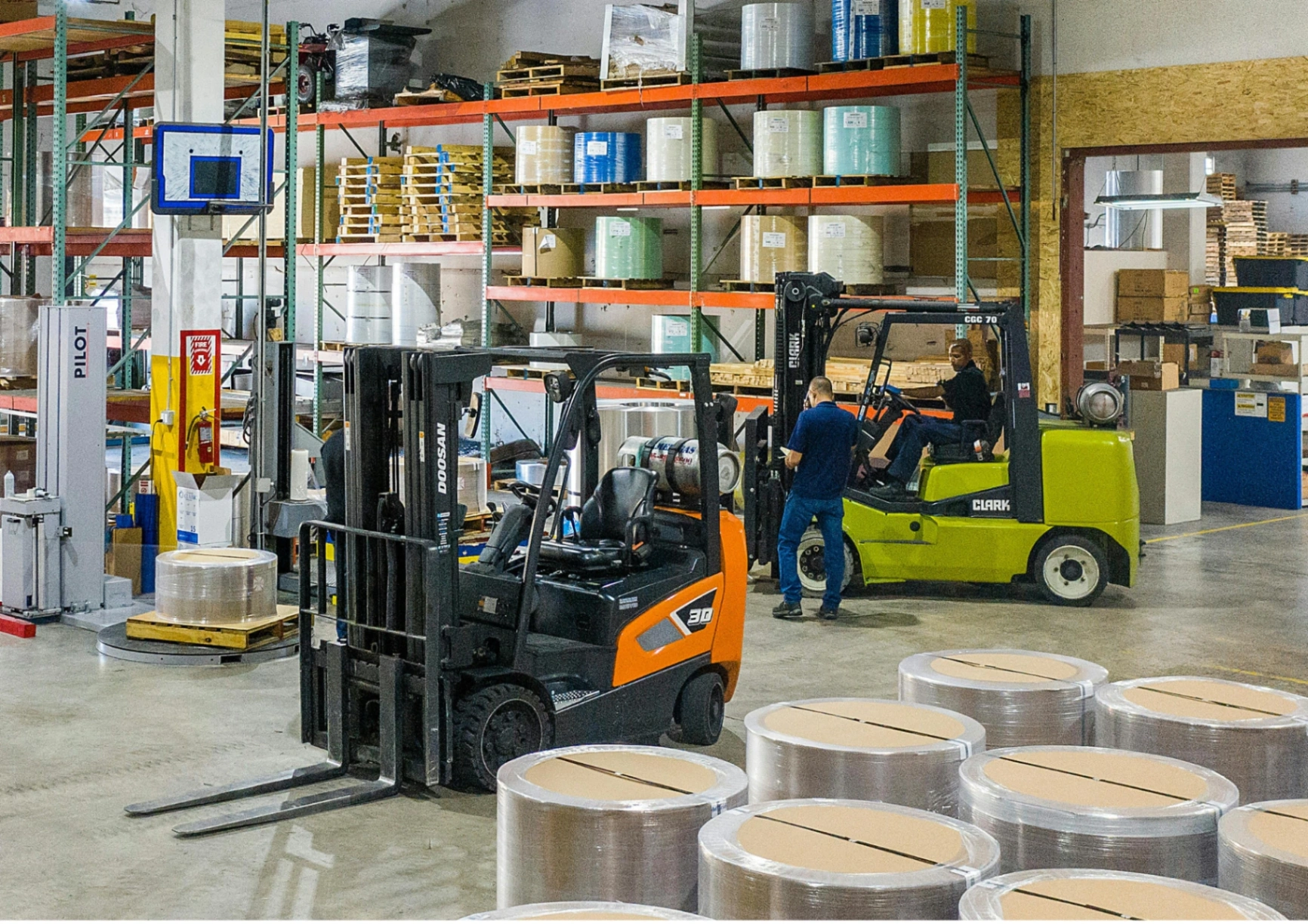
A warehouse forklift is a compact, highly agile machine built specifically to move, lift, stack, and organize goods inside indoor facility environments. While traditional outdoor trucks usually run on loud internal combustion engines, modern warehouse models are predominantly electric and battery-powered.
At Forklogic, we highly recommend electric options for indoor setups. Because they feature zero-emissions and run almost silently, they are the ideal choice for enclosed spaces allowing your operators to navigate tight corridors and narrow racking systems safely and comfortably.
Warehouse Forklift Considerations
There are several critical factors you need to evaluate when choosing the right warehouse forklift for your business. Selecting a machine based on price alone can result in a fleet that is either underpowered for your loads or too bulky for your floor plan. Call our team on 1300 360 936 if you need help working out which forklift is the best choice for your warehouse.
When hiring or purchasing, ensure you assess the following key elements:
🔹Assess Load Requirements
Before anything else, you must understand the weight and dimensions of your typical inventory. Forklifts are rated by their maximum lifting capacity. Operating a machine near its limit strains the hydraulic systems, compromises safety, and accelerates wear and tear. Always select a forklift with a load capacity that comfortably exceeds your heaviest everyday pallets.
🔹Warehouse Layout
Your physical workspace dictates the physical dimensions of the machinery you can safely deploy. When evaluating your layout, consider the below points:
- Tight Aisles: Standard forklifts require wider turning circles. If your facility utilises high-density storage with narrow aisles, you will need specialised, compact equipment like reach trucks or walkie stackers.
- High Racks: Ensure your forklift maintains its stability and load capacity even when forks are fully extended to your highest racking beam.
- Dock Loading: Loading and unloading shipping containers requires low-clearance masts that can enter enclosed containers without striking the roof, paired with durable tyres that handle dock leveling ramps.
- Mixed Indoor/Outdoor Use: If a machine needs to transition from smooth indoor concrete floors to uneven outdoor loading yards, it will require specific tyre types and adequate ground clearance to operate safely.
🔹Lift Height
Calculate your maximum lift height by measuring from the floor to your highest shelving rack, then add at least 200mm to ensure your operators have enough clearance to lift and lift out a pallet safely. Additionally, check the collapsed mast height of the forklift to ensure it can clear your facility's doorways and overhead fixtures.
🔹Operating Environment
The environment dictates your power source and safety features. Enclosed spaces, cold storage facilities, or food and beverage warehouses often require zero-emission electric forklifts to comply with OH&S air-quality regulations.
Warehouse Forklift Types
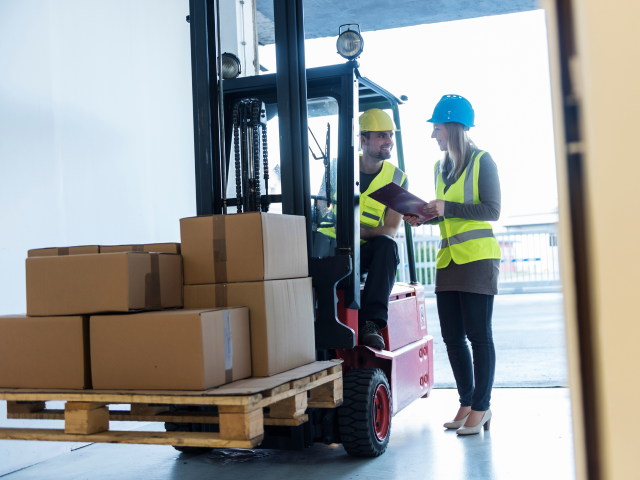
Walk into any busy facility and you’ll quickly realise that material handling isn’t a one-size-fits-all operation, there is a range of warehouse forklift types. Different warehouses and businesses require different machinery. If you use a bulky truck in a tight aisle, you create major bottlenecks. Use a machine without enough reach, and you're leaving valuable vertical storage space empty.
At Forklogic, we look at your operational layout to match the exact machine to your day-to-day demands. Call us on 1300 360 936 to speak to our team about our range of indoor warehouse forklifts.
1. Counterbalance forklifts
This is the classic, heavy-duty workhorse most people picture. Counterbalance forklifts feature a heavy weight built into the rear of the chassis to offset the load carried on the front forks and they can drive straight up to a pallet, container, or flatbed truck. They are incredibly versatile, making them the go-to choice for loading docks, open-plan floor spaces, and rapid cross-docking operations.
When to Use It: Choose a counterbalanced forklift if your workflow is heavily focused on moving bulk goods from outdoors to indoors, unloading transport trucks, or operating across open, spacious floor plans and loading docks.
Spatial Impact: They carry their weight in the back, making them longer and wider than other models. To turn safely with a load, a standard counterbalance truck typically requires an aisle width of 3.3 to 3.8 metres.
2. Reach Trucks
When your warehouse layout focuses on maximizing vertical space, reach trucks are the industry standard. They are engineered specifically for high-density racking environments. Instead of a fixed front mast, they feature stabilizing outrigger legs and a moving mast assembly that "reaches" deep into tight racking channels.
When to Use It: Choose a reach truck if your main priority is storage density, indoor pallet stacking, and squeezing as many inventory racks into your warehouse footprint as possible. (Note: They require smooth, level indoor concrete floors and aren't built for rough outdoor yards).
Spatial Impact: They spin on an incredibly tight axis, allowing them to operate comfortably in narrow aisles down to 2.6 metres while lifting pallets to impressive vertical heights.
3. Walkie Stackers
Not every warehouse needs—or has the space for—a massive ride-on vehicle. A walkie stacker is a pedestrian-operated electric model where the operator walks behind the machine or stands on a fold-down platform.
When to Use It: Choose a walkie stacker if you run a smaller stockroom, a light-duty staging area, or a retail environment where safety, budget, and a tight turning circle are the main priorities.
Spatial Impact: Ultra-compact and highly agile, these machines have zero tail-swing, meaning they can navigate the tightest corners and smaller corridors with ease.
4. Order Picker
Standard forklifts move full pallets, but order pickers are built for piece-picking and e-commerce fulfillment. Instead of just raising the forks, an order picker lifts the operator right up to the inventory shelves. The driver stands on a secure, rising platform alongside the controls, allowing them to hand-pick individual cartons or SKUs directly from high-tier racking.
When to Use It: Choose an order picker if your business is driven by online order fulfillment, piece-picking, and rapid warehouse dispatch cycles where operators need direct, fast access to individual items rather than bulk pallets.
Spatial Impact: Built narrow to glide down specialized picking aisles, maximizing vertical picking slots without sacrificing floor space.
Electric vs. LPG vs. Diesel Forklifts: Which Fuel Type Wins in the Warehouse?
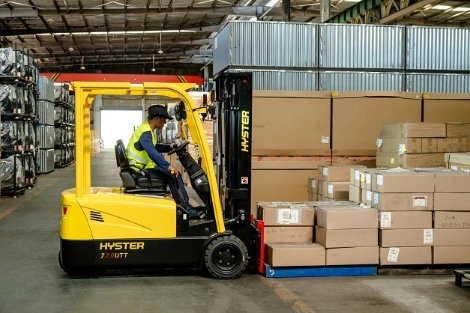
Once you know the machine style your layout demands, you need to decide what powers it. Your fuel source directly impacts daily overheads, indoor air quality compliance, and fleet uptime.
To keep your operators safe and your running costs low, here is how the three primary fuel choices stack up in a logistics environment.
🔋 Electric & Lithium-Ion Forklifts
If your operations are strictly indoors, especially in food, beverage, or tightly enclosed logistics hubs, electric warehouse forklifts are the industry benchmark.
- Performance: Running on modern lithium-ion batteries means zero tailpipe emissions, making them perfectly safe for unventilated spaces.
- Maintenance: With fewer moving parts than a combustion engine, they dramatically lower long-term servicing costs and mechanical downtime.
- Handling: Offers exceptionally quiet operation and precise control when navigating high-density racking.
🔹 The Forklogic Advantage: Older electric models required hours of static charging, but we supply cutting-edge lithium-ion units that allow for quick "opportunity charging" during staff breaks. They are the ultimate low-maintenance indoor asset.
⛽ LPG Forklifts
Liquid Petroleum Gas (LPG) forklifts are the classic "jack-of-all-trades" for businesses that need a machine to transition seamlessly from a covered warehouse floor to an outdoor loading yard.
- Performance: Delivers the constant, heavy-duty torque of an internal combustion engine, allowing for faster travel and lift speeds than standard electric models.
- Compliance: Produces significantly cleaner emissions than diesel, meaning they are completely safe to use inside large, well-ventilated warehouses.
- Uptime: Zero battery charging downtime. When a gas cylinder runs dry, the operator simply swaps it out for a fresh tank in under two minutes.
🔹 The Forklogic Advantage: We highly recommend LPG hire or purchase for fast-paced, multi-shift operations where your machinery cannot afford to sit idle at a charging station.
⛽ Diesel Forklifts
Diesel forklifts are built tough to survive the elements and move heavy, oversized loads effortlessly.
- Performance: Provides unmatched raw power, high weight capacities, and superior tyre traction on rough yard surfaces or steep loading ramps.
- Environment: Due to heavy exhaust emissions and high noise levels, they are strictly unsafe for enclosed indoor spaces.
- Efficiency: Highly fuel-efficient for long, grueling shifts in demanding outdoor layouts.
🔹 The Forklogic Advantage: While a diesel truck won’t be navigating narrow indoor racking aisles, it’s an essential asset for external logistics yards and container unloading. We ensure our entire diesel fleet meets strict Australian safety standards to give you maximum lifting power without compromising site safety.
The Benefits of A Warehouse Forklift
✅ Increased Efficiency and Productivity
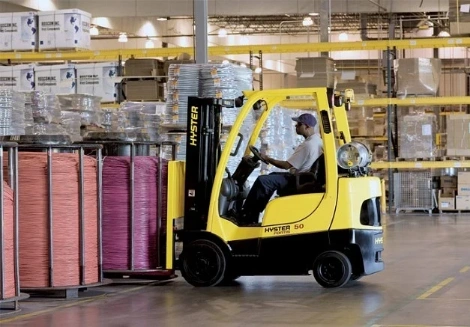
Forklifts are essential assets for streamlining warehouse logistics, drastically reducing the time it takes to move heavy goods. Whether you deploy an agile electric model or a robust reach truck, your team can rapidly transport bulk pallets across large facility floors that would otherwise take hours to move manually or with basic hand jacks.
✅ Enhanced Safety
Utilizing dedicated warehouse forklifts eliminates the heavy physical stress of manual lifting, heavily reducing workplace injuries and staff downtime. Modern material handling machinery is engineered with built-in safety measures—including clear-view masts, responsive braking, and ergonomic controls—to ensure secure, hazard-free operations across your floor.
✅ Cost-Effective Operations
While investing in industrial material handling equipment represents an upfront cost, the long-term return on investment is undeniable. Upgrading to a modern, durable forklift fleet drives down labor hours, minimizes inventory damage, and drastically lowers ongoing maintenance costs, proving highly profitable for your bottom line over time.
Common Uses of Warehouse Forklifts
1️⃣Pallet Handling and Stacking
The core of any logistics operation is moving bulk goods securely. Forklifts allow operators to pick up heavy pallets and lift them smoothly into high-tier vertical racking. This makes stock organization seamless and ensures your facility maximizes its floor space.
2️⃣ Unloading Containers and Inbound Freight
When delivery trucks, flatbeds, or sea containers arrive at your loading dock, speed is everything. Using a nimble counterbalance forklift or a walkie stacker allows your team to enter tight container spaces, rapidly clear inbound freight, and prevent costly transport delays.
3️⃣ High-Speed Stock Management and Picking
For fast-paced e-commerce distribution centers, inventory needs to move constantly. Specialized machines like order pickers carry your operators directly to individual shelving slots to handle piece-picking or SKU replenishment, making daily order fulfillment incredibly accurate and fast.
4️⃣ Handling Heavy and Oversized Materials
Not all warehouse inventory fits neatly onto a standard pallet. Logistics hubs frequently need to transport heavy machinery components, raw industrial materials, or oversized crates. Utilizing a heavy-duty forklift ensures these high-capacity loads are stabilized and transported safely across the facility floor without risking equipment strain or structural accidents.
💡 The Forklogic Insight:
If your business wants to unlock these benefits without the upfront capital expense of purchasing, our flexible forklift hire options allow you to scale your fleet productivity up or down exactly when your operations demand it. Call our team today on 1300 360 936 to see our flexible hire options.

Are You Ready to Optimise Your Warehouse Forklift Fleet?
Choosing a warehouse forklift isn’t just about getting a piece of machinery, it’s about making your daily operation run easily, safely, and without unnecessary headaches. When your equipment actually fits your floor plan, your team gets more done, stock stays safe, and you finally use all that wasted vertical space.
At Forklogic, we keep things simple. Whether you need a quick forklift hire to get through a busy season or want to buy a reliable new electric fleet, we provide straightforward, cost-effective options without the massive dealer markups.
📞 Contact Our Team Today
Call us today on 1300 360 936 or fill out our enquiry form and we can help pick the right indoor warehouse forklift for your business.