Different Types of Boom Lifts: A Guide to Choosing the Right One
Understand Boom Lift Key Differences
Choosing the right boom lift starts with understanding how each type is designed to reach and operate. Different boom lifts offer different working heights, horizontal reach, manoeuvrability and power options, making some better suited to particular jobs and worksites than others.
Hiring or purchasing the wrong machine can mean unnecessary costs, delays and downtime while you wait for the right equipment. For example, using a diesel boom lift for an indoor application may not be suitable where exhaust emissions are restricted.
Below, we look at the different types of boom lifts available from Forklogic for hire and sale, and where each type is best suited.
What Is a Boom Lift?
A boom lift is a type of mobile elevated work platform (MEWP) used to lift workers, tools and equipment to elevated or hard-to-reach areas. Unlike equipment that only moves vertically, a boom lift can extend upwards and outwards, providing greater reach and positioning flexibility.
Boom lifts are available with either articulating (knuckle) or telescopic booms, with the right type depending on the required height, reach and worksite conditions.
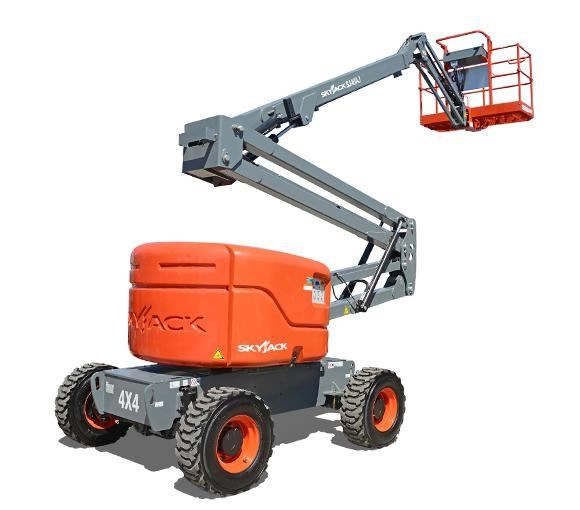
Telescopic Boom Lift
A telescopic boom lift, also known as a straight boom lift, is designed for jobs requiring significant working height and long horizontal reach. Its straight, extendable boom allows the platform to reach up and out to elevated work areas.
They are commonly used for construction, building maintenance, installation and industrial work, particularly on open outdoor worksites.
Key Features & Benefits
- High working heights: Ideal for accessing elevated work areas.
- Long horizontal reach: Extends the platform outwards to reach work away from the machine.
- Rough terrain capability: Many models feature 4WD and heavy-duty tyres for outdoor worksites.
- Platform capacity: Can carry operators, tools and equipment within the machine's rated limits.
- 360° rotation: Allows the platform to be positioned around the work area without constantly moving the base.
Articulating Boom Lift (Knuckle Boom)
An articulating boom lift, also known as a knuckle boom, uses multiple hinged boom sections to move the platform up, over and around obstacles. This makes it a versatile choice when direct access to the work area isn't possible.
They are commonly used for construction, maintenance, electrical work, tree trimming and building projects where flexibility and positioning are important.
Key Features & Benefits
- Up-and-over reach: Moves over obstacles to access difficult work areas.
- Flexible positioning: Multiple boom sections provide greater manoeuvrability.
- Compact options: Some models are suited to tighter work areas.
- Multiple applications: Suitable for construction, maintenance and installation work.
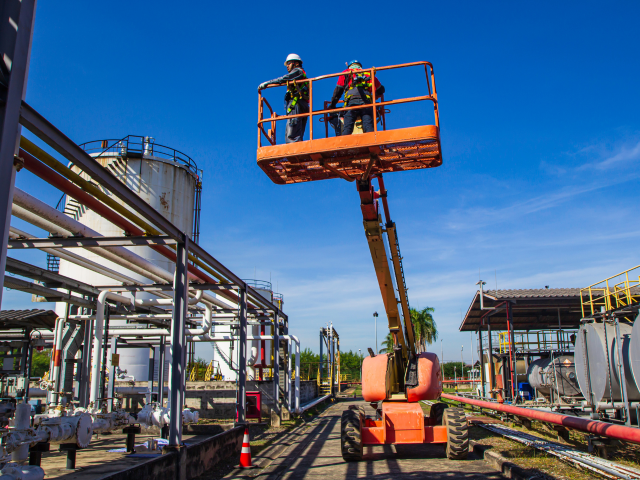
Trailer-Mounted Boom Lift (Towable Knuckle Boom)
A trailer-mounted boom lift, or towable knuckle boom, is a compact access platform that can be transported by towing it behind a suitable vehicle. Its articulated boom provides flexible positioning while its towable design makes it convenient for jobs across multiple locations.
They are commonly used for building maintenance, electrical work, painting, signage, tree maintenance and property upkeep.
Key Features & Benefits
- Easy to transport: Can be towed between different work locations.
- Compact design: Useful where larger boom lifts may be difficult to access.
- Flexible reach: Articulating sections help position the platform around obstacles.
- Quick setup: Designed for efficient deployment on suitable worksites.
Electric Boom Lift
An electric boom lift is powered by batteries rather than a diesel engine, making it well suited to indoor and low-emission work environments. Electric models are generally quieter and produce no direct exhaust emissions during operation.
They are commonly used for warehouse maintenance, commercial buildings, fit-outs, electrical work and indoor construction.
Key Features & Benefits
- Quiet operation: Suitable for noise-sensitive environments.
- No direct exhaust emissions: A practical option for indoor applications.
- Manoeuvrable: Compact models can work effectively in confined areas.
- Versatile access: Available in both articulating and telescopic configurations.
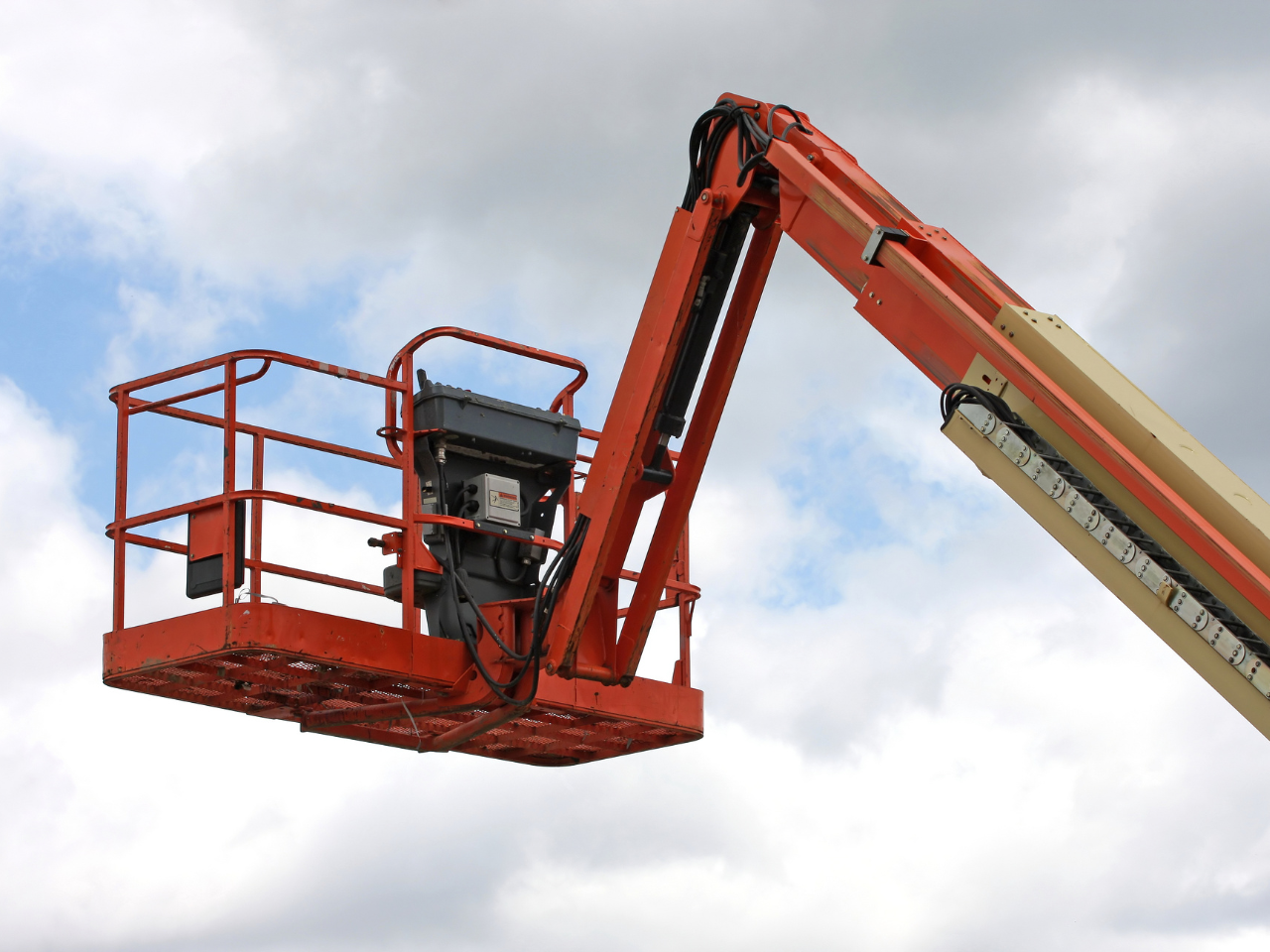
Diesel Boom Lift
A diesel boom lift is designed for demanding outdoor applications where power, working height and terrain capability are important. Diesel-powered models are commonly available in larger configurations for construction and industrial worksites.
They are commonly used for construction, infrastructure, structural work, industrial maintenance and large outdoor projects.
Key Features & Benefits
- Built for outdoor work: Well suited to demanding construction environments.
- High reach: Available in configurations designed for substantial working heights and horizontal reach.
- Strong performance: Diesel power supports demanding applications.
- Rough terrain options: Many models are designed for uneven outdoor surfaces
Rough Terrain Boom Lift
A rough terrain boom lift is designed for outdoor worksites where uneven or challenging ground conditions make standard access equipment unsuitable. These machines typically feature four-wheel drive, heavy-duty tyres and increased ground clearance.
They are commonly used for construction, civil works, infrastructure projects and large outdoor worksites.
Key Features & Benefits
- 4WD capability: Helps the machine navigate challenging worksite conditions.
- Heavy-duty tyres: Designed for outdoor and uneven surfaces.
- Ground clearance: Provides greater capability across rough terrain.
- High reach: Available in configurations for elevated construction and maintenance work.
Boom Lift Types Compared
|
Boom lift type |
Best suited to |
Key advantage |
|
Articulating |
Obstacles and restricted access |
Reaches up, over and around |
|
Telescopic |
Open outdoor areas |
Long reach and high working heights |
|
Electric |
Indoor applications |
Quiet, low-emission operation |
|
Diesel |
Outdoor construction |
Power and durability |
|
Rough terrain |
Uneven ground |
Better off-road capability |
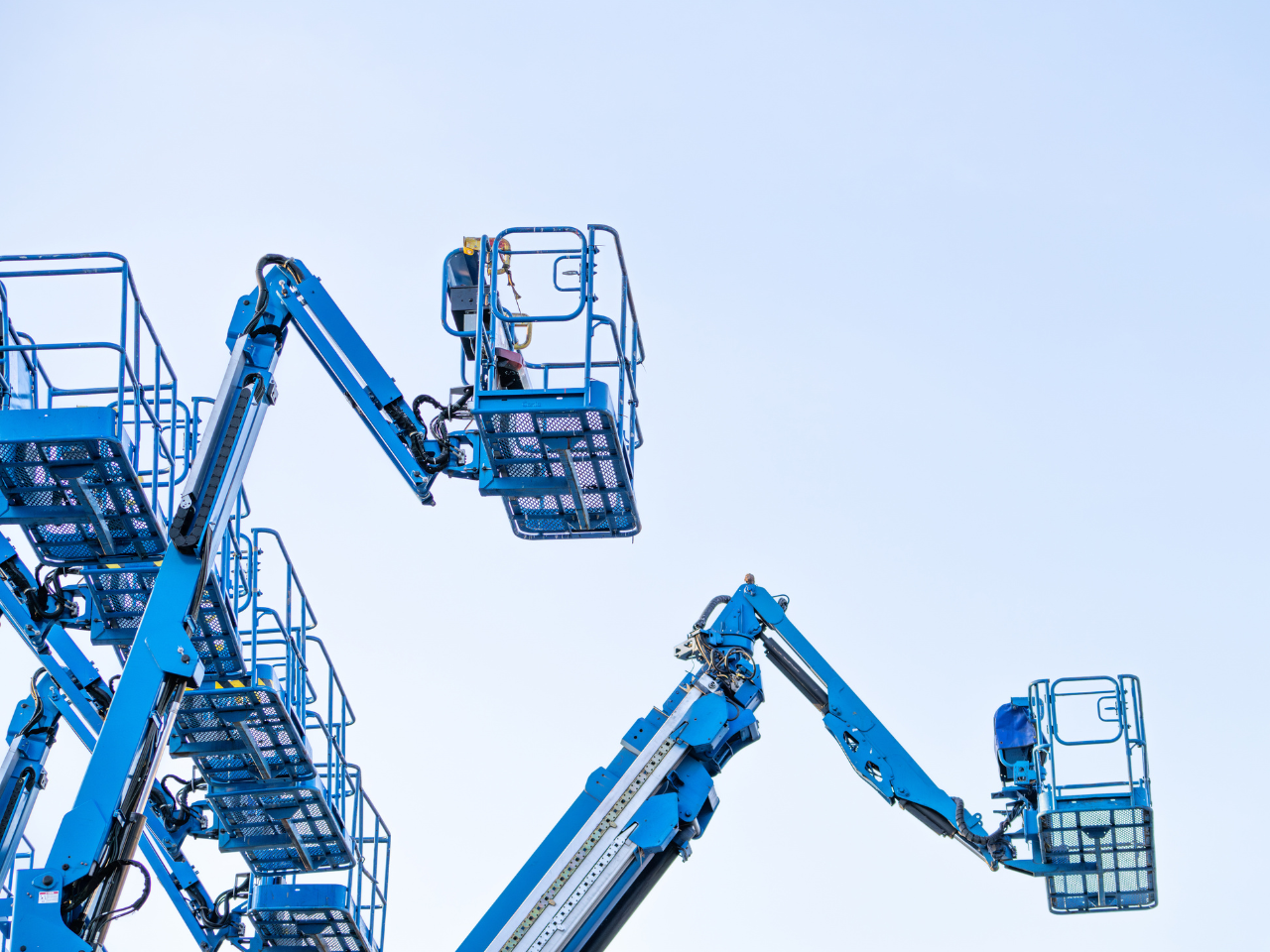
Boom Lift Licensing and Operator Requirements
The licensing requirements for operating a boom lift in Australia depend primarily on the boom length. A High Risk Work Licence (WP) is required to operate a boom-type elevating work platform with a boom length of 11 metres or more.
Boom lifts with a boom length below 11 metres do not require a WP licence solely due to their size, but operators still need appropriate training, instruction and competency to safely use the equipment. Employers and worksites may also have additional requirements.
Before operating or hiring a boom lift, check the machine specifications and make sure the operator has the appropriate training, licence and authorisation for the equipment and worksite.
How Do You Choose the Right Boom Lift?
Choosing the right boom lift comes down to the job, the worksite and how you need to access the work area. Before hiring a machine, consider:
- Working height: How high does the platform need to reach?
- Horizontal reach: Do you need to work directly above the machine or reach out from it?
- Access: Are there obstacles, narrow spaces or restricted access points?
- Ground conditions: Will the machine be working indoors, on sealed surfaces or uneven terrain?
- Power source: Electric models can suit indoor environments, while diesel models are commonly used outdoors.
- Platform capacity: Make sure the lift can safely carry the required workers, tools and equipment.
|
If your priority is... |
Consider... |
|
Long straight-line reach |
Telescopic boom |
|
Reaching over obstacles |
Articulating boom |
|
Indoor, low-emission work |
Electric boom |
|
Large outdoor construction sites |
Diesel boom |
|
Uneven or challenging terrain |
Rough terrain boom |
|
Easy transport between sites |
Trailer-mounted boom |
If you need to reach up and over obstacles, an articulating boom lift may be the better choice. For greater straight-line height and reach, a telescopic boom lift may be more suitable.
What Are Boom Lifts Used For?
Boom lifts are used wherever workers need safe access to elevated or difficult-to-reach areas. Their combination of working height, horizontal reach and platform positioning makes them useful across a wide range of industries and worksites.
Common boom lift applications include:
- Construction: Building, structural and installation work
- Electrical work: Accessing elevated electrical equipment and infrastructure
- Building maintenance: Repairs, inspections, painting and external maintenance
- Industrial sites: Equipment installation, servicing and maintenance
- Warehouses and facilities: Reaching high-level areas for maintenance and repairs
- Signage: Installing and maintaining signs at height
- Tree work: Pruning and maintenance where suitable equipment is required
- Infrastructure: Elevated work on roads, bridges and other large-scale projects

Ready to Find the Right Boom Lift for Your Job?
Now that you know the different types of boom lifts, the next step is finding the right machine for your working height, reach and jobsite requirements.
Forklogic offers a range of boom lifts for hire and sale, with options to suit different applications and worksites.
Browse our available boom lifts or contact the Forklogic team to discuss what you need.